


A student-led movement over an alleged exam paper leak has snowballed into a national flashpoint — with police crackdown allegations, Bollywood voices, a Supreme Court snub, and Parliament gridlock all colliding in a single chaotic week
NEW DELHI — What began as a students’ protest over an alleged NEET paper leak has, over the course of a single tumultuous week, pulled in the Supreme Court, Parliament, Bollywood celebrities, and now a formal UN complaint — turning Jantar Mantar into the epicenter of one of the year’s most closely watched standoffs between citizens and the state.
The Core Demand Hasn’t Changed
At the heart of it all is a blunt, unmoving demand from the group calling itself Cockroach Janta Party (CJP): the resignation of Union Education Minister Dharmendra Pradhan over the alleged NEET paper leak. Addressing supporters on Wednesday, CJP spokesperson Ashutosh Ranka declared the protest wouldn’t budge from Jantar Mantar until that demand is met, framing the movement’s achievement so far as reviving a national habit of questioning authority that he said the country had lost.
Monday’s March Is Now the Real Story
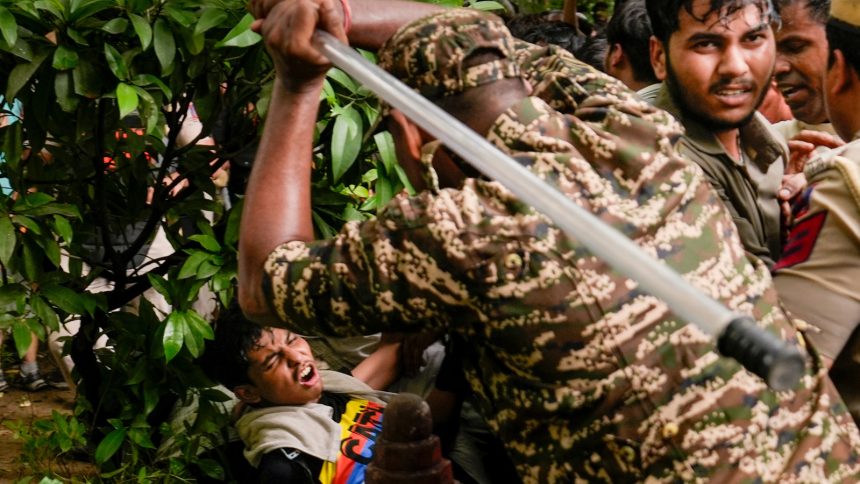
The turning point came two days earlier, when CJP’s “Sansad Chalo” march toward Parliament on July 20 ended in what protesters and their lawyers describe as a disproportionate police response — lathi-charges and tear gas that left students, lawyers, journalists, and even medical personnel injured, according to petitions filed before the Delhi High Court.
The High Court has since directed the Delhi Police to preserve all footage and records from the incident and sought a formal response from both the police and the central government. Separately, Supreme Court Bar Association president Vikas Singh wrote directly to Prime Minister Narendra Modi and Home Minister Amit Shah, alleging an “unprovoked and disproportionate” crackdown and demanding a judicial inquiry.
Not every court was receptive, though — the Supreme Court itself declined to urgently hear a plea on the matter, with Chief Justice of India Surya Kant reportedly telling the petitioner’s lawyer the court had no time to watch videos of the incident.
The Government’s Defense
BJP MP Bansuri Swaraj pushed back hard against the brutality narrative, arguing that the government’s approach to the protest had actually been sensitive from the start — pointing out that Delhi Police granted CJP founder Abhijeet Dipke permission to protest on the very day he requested it, well before the movement escalated.
Meanwhile in Parliament, the government signaled openness to a formal discussion on the NEET paper leak issue itself, with Parliamentary Affairs Minister Kiren Rijiju telling the Lok Sabha the Centre was willing to debate it — though notably stopping short of engaging with the resignation demand, which the Opposition, led by Congress’s K.C. Venugopal, insisted must be part of any discussion.
The Protest Has Gone Beyond Students
What makes this moment distinct is how far the movement has spread beyond its original base:
- Celebrities have piled in. Actor Naseeruddin Shah posted an emotional video comparing the police response to American ICE agents, warning authorities that “everything will be remembered.” Singer Arijit Singh posted his own furious message online, accusing police and politicians of acting as though they were untouchable.
- Opposition parties, despite their differences, showed rare unity — Congress, Samajwadi Party, TMC, and other INDIA bloc MPs staged a black-clothing protest inside Parliament, with SP chief Akhilesh Yadav insisting the issue “is not about Congress, SP or the BJP” but about the country’s youth.
- A UN complaint has now entered the picture, with TMC’s Saket Gokhale saying he filed a formal grievance with UN Special Procedures, arguing that “every route at home is being held shut” by the government.
- Ordinary citizens have mobilized in unusual ways — food delivery orders from Zomato and Swiggy have poured in from across the country to feed protesters at the site, an informal but visible sign of public sympathy.
The Situation on the Ground Remains Tense
Delhi Metro shut down 16 stations on Wednesday citing “security reasons,” stranding commuters and forcing many to scramble for alternative routes. Videos also circulated online alleging that Rapid Action Force personnel used electric shock batons against women protesters — footage that has added fuel to the brutality allegations, though it has not been independently verified.
The unrest hasn’t stayed confined to Delhi either — Bihar Police used tear gas, water cannons, and baton charges against a similar student march in Patna on Wednesday, suggesting the movement’s reach is expanding well beyond the capital.
Adding to the emotional backdrop, climate activist Sonam Wangchuk’s hunger strike over the same issue entered its 25th day, with CJP itself publicly urging him to end the fast and prioritize his health — even as they vowed to keep fighting his cause.
Where Things Stand
CJP has said it’s open to talks with the government but insists any meeting happen at a neutral venue near Jantar Mantar rather than at a minister’s residence — and only if the Centre shows genuine intent to address their demands, not just optics. As of Wednesday evening, the organisation said it was still waiting to hear back.
With Parliament gridlocked, courts divided on how urgently to intervene, and public sympathy visibly building through gestures as small as a food delivery order, the standoff shows no sign of a quick resolution — and Wednesday’s events suggest it may be spreading rather than winding down.