


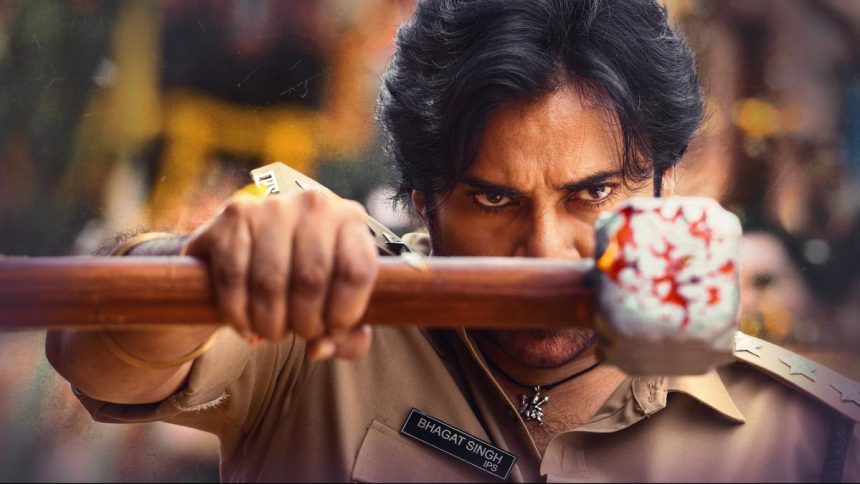
Pawan Kalyan Ustaad Bhagat Singh was never just another film—it was an event, a carefully timed merger of cinema and politics, star power and mass emotion. The moment the credits rolled on its first official shows, the press meet that followed turned into a mini‑celebration, where the team didn’t just talk about box‑office numbers, but about legacy, timing, and the elusive “perfect Ugadi gift” for fans.
The return of a mass icon
Pawan Kalyan has long occupied a unique space in Telugu cinema: part star, part political leader, part cult figure. In Ustaad Bhagat Singh, he re‑enters the big screen not as a politician wearing a hero’s costume, but as a hero who has absorbed the weight of public life into his screen persona. The press meet reflected that shift—the assembled journalists didn’t just ask about fights and dialogues, but about how he juggled the responsibilities of office with the rigors of a commercial shoot. His answer, characteristically, was a mix of gratitude and understatement: a nod to the crew, a direct thank‑you to the audience, and a quiet acknowledgment that this film matters.
Director and producers: playing the long game
Director Harish Shankar, known for his commercial, high‑octane templates, positioned Ustaad Bhagat Singh as a “mass‑oriented entertainer” that still respects character and emotion. Sitting beside producers Naveen Yerneni and Y. Ravi Shankar, he spoke about the years of planning that went into the project and the deliberate effort to balance Pawan’s political calendar with the demands of production. The producers, in turn, framed the film as a bet on the actor’s enduring appeal, openly speculating that it could deliver at least “double the impact” of his recent blockbuster OG. That kind of statement isn’t just trade talk—it’s a signal to exhibitors, distributors, and fans that the makers expect this release to define the first half of the year.
The women behind the star’s shadow
While Pawan and Harish dominated the narrative, the presence of Sreeleela and Raashii Khanna added a quieter, more personal dimension to the event. Both actresses described the film as a “Ugadi gift” for audiences, but in their own words, they also hinted at what it meant for their careers. Sreeleela, a rising star in the Telugu industry, spoke of confidence and the thrill of working alongside a mass icon, while Raashii, already a pan‑Indian name, called the project “special” for its blend of action and emotion. Their anecdotes and smiles offered a counterpoint to the usual chest‑thumping about box‑office and scale, reminding everyone that behind the spectacle are performers who see the film as more than just a commercial equation.
A family entertainer in a fractured market
What stood out most in the press meet was the repeated emphasis on Ustaad Bhagat Singh as a “family entertainer”—a phrase that has become more aspirational than automatic in today’s fragmented theatrical landscape. The team outlined a deliberate strategy: enough action and mass beats to keep the youth in the front rows, enough emotional arcs and family drama to hold the middle‑aged and older viewers, and enough star power to pull in the diaspora crowd during holidays. In a market where streaming has eaten into traditional theatrical consumption, the makers are betting that Pawan’s return, combined with careful word‑of‑mouth and a festival‑week release, can coax viewers back into multiplexes and single‑screen halls alike.
Beyond the first‑day buzz
The immediate aftermath of the release is always a fragile kind of optimism. The press meet, for all its excitement, was also a performance of confidence—carefully worded lines about “dreams coming true,” “double the impact,” and “perfect Ugadi gifts.” But for readers and long‑time followers of Telugu cinema, the real story lies ahead: how the film holds up over the first weekend, how critics parse its politics‑on‑screen, and whether the industry’s high expectations match the audience’s verdict. For now, Ustaad Bhagat Singh exists in that liminal space between hype and history—part event, part experiment, and very much a reflection of the changing relationship between stardom, politics, and the big screen in Telugu cinema.