


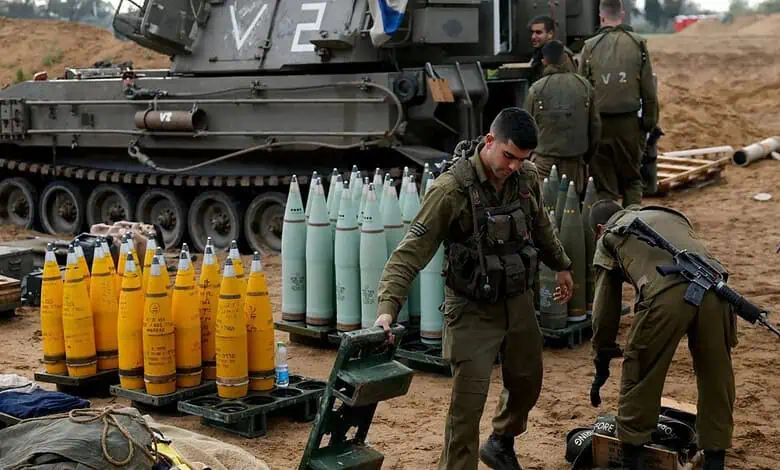
A new Amnesty International investigation says India exported at least 2,596 shipments of weapons, ammunition and military components to Israel between 7 October 2023 and 30 November 2025, while Israel waged its war in Gaza. The report warns that these exports could make Indian authorities and companies complicit in serious violations of international law, including possible genocide.
What the report says was shipped
According to Amnesty’s analysis of customs data and company records, the shipments included:
- 390,516 small-arms parts for military-grade weapons
- 564,970 explosive ordnance parts, such as drone warheads and artillery shell casings
- 298 armoured vehicle components
Specific items flagged include machine-gun components used by Israeli forces in Gaza, 155mm high-explosive artillery shells supplied to Elbit Systems, and explosive warheads for Skystriker “kamikaze” drones similar to debris found in Khan Younis.
Amnesty says its methodology was deliberately conservative and likely underestimates the true scale of India’s contribution to Israel’s military supply chain.
Companies named
The report identifies both private and state-linked Indian firms, including:
- PLR Systems (a joint venture between Adani Defence & Aerospace and Israel Weapon Industries)
- Indo MIM (firearm components)
- Kalyani Systems / Bharat Forge (artillery rounds and casings)
- Munitions India Limited (state-owned, high-explosive artillery rounds)
- Alpha Elsec Defence & Aerospace (joint venture with Elbit Systems, explosive warheads)
These companies supplied large Israeli defence firms such as Elbit Systems, Rafael Advanced Defense Systems, and Israel Aerospace Industries, which Amnesty says are directly involved in Israel’s military operations in Gaza and the occupied territories.
Legal and ethical risks
Amnesty argues that, given the International Court of Justice’s provisional measures recognizing a plausible risk of genocide in Gaza, India cannot credibly claim ignorance of the risks posed by continuing arms transfers. Under the Genocide Convention and the Geneva Conventions, states must not assist in serious violations of international humanitarian law.
The report also highlights structural gaps in India’s export controls, including:
- No explicit legal requirement for human rights due diligence before approving arms exports
- Limited transparency and accountability in the licensing process
- India’s non-accession to the Arms Trade Treaty, which sets global standards to prevent arms being used for grave human rights abuses
Government response and court cases
The Indian government has defended its arms exports by citing “national interest” and long-standing security cooperation with Israel. External Affairs Minister S. Jaishankar has said India’s export decisions are guided by national security considerations and commitments to international regimes, without commenting specifically on Gaza.
Separately, activists and former bureaucrats filed a public interest litigation in India’s Supreme Court seeking cancellation of export licences for firms supplying arms to Israel. The petition cites the ICJ’s warnings and UN expert statements that such transfers risk complicity in international crimes, including genocide. The Court has so far treated foreign policy and arms export decisions as largely within the executive’s domain.
Broader context: India–Israel defence ties
India is the world’s largest buyer of Israeli weapons, and several Israeli defence firms have set up joint ventures and production units in India. Over the past decade, defence cooperation has deepened under Prime Ministers Narendra Modi and Benjamin Netanyahu, with new MoUs and talks on co-production of systems such as missile defences.
Diplomatically, India has not joined South Africa’s ICJ case against Israel, has opposed calls for an arms embargo, and has restricted pro-Palestine protests at home, even as it officially supports a two-state solution and humanitarian aid for Gaza.
What Amnesty is calling for
Amnesty International is demanding that India:
- Immediately stop authorizing exports of weapons, ammunition and related parts to Israel
- Ensure companies under its jurisdiction do not contribute to crimes under international law
- Accede to the Arms Trade Treaty and align its export controls with international human rights and humanitarian law standards
The report concludes that, by continuing to supply arms while aware of the scale of civilian harm in Gaza, India risks legal and moral complicity in violations that may amount to war crimes and genocide.