


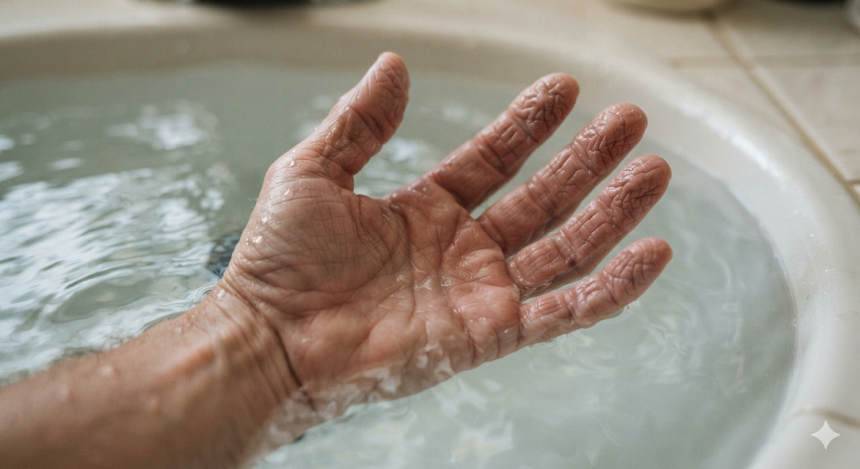
Fingers wrinkle in water because of an active reflex controlled by the nervous system. It is not simply the skin absorbing water and swelling, as once believed. Instead, the body triggers a response that changes the shape of the skin.
What actually happens
When you keep your hands in water for several minutes, the outermost layer of skin swells slightly. But the main reason for the wrinkles is the narrowing of blood vessels below the skin. This process is called vasoconstriction.
The autonomic nervous system sends a signal to the blood vessels in the fingertips. The vessels constrict, and the soft tissue under the skin loses volume. Because the outer skin stays attached to the tissue below, it pulls inward and forms wrinkles.
Why it happens
Scientists believe this reflex helps improve grip in wet conditions. The wrinkles act like tiny treads on a car tyre. They channel water away from the point of contact between the finger and an object.
Studies have shown that people with wrinkled fingers can handle wet objects more easily. They use less grip force compared to those with wet but unwrinkled fingers. This suggests that the wrinkles evolved to help early humans grasp slippery items and move safely in wet environments.
What it can reveal
The wrinkling response depends on healthy nerve function. If the nerves in the fingers are damaged, the skin may not wrinkle even after long exposure to water. Doctors sometimes use this observation to check for nerve damage or conditions like diabetes.