


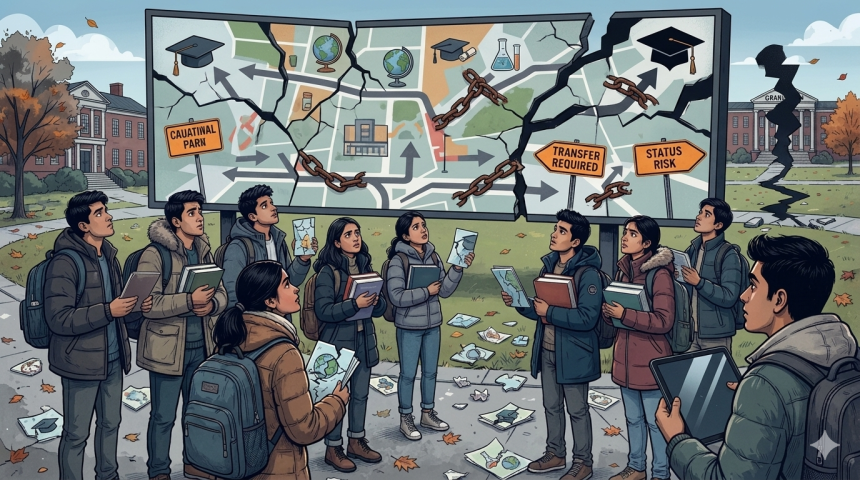
A fresh U.S. student visa rule is raising alarms among international students, with warnings that it could disrupt ongoing degrees, force transfers and create fresh uncertainty for those chasing American education. The change has sparked concern across major sending countries, including India, where dreams of U.S. degrees often shape entire career plans.
What the rule changes
The new regulation tightens conditions around F-1 visa status, placing stricter limits on how students can maintain their enrollment, switch programs and manage practical training. For many, this means less flexibility to adjust courses, change majors or move between universities without risking their visa.
Students who assumed they had room to explore options may now find themselves locked into rigid pathways. A wrong step — such as an administrative delay, a program change or a break in studies — could now carry far heavier consequences.
Disruption for current students
The biggest worry is for students already in the U.S. who planned their degrees under older, more forgiving rules. Some may now face the risk of losing status if their course load, credit hours or program structure no longer align with the tightened requirements.
For those relying on internships, co-ops or optional practical training, the stricter framework could mean fewer opportunities to gain work experience that once made a U.S. degree so valuable. In some cases, students may have to reconsider whether continuing in the U.S. is still viable.
Impact on future applicants
For prospective students, the message is clear: planning a U.S. degree now requires more caution. Families may think twice before committing large sums of money if the path to graduation and work experience looks less certain.
Universities that depend heavily on international enrollments could also feel the pressure. Stricter rules may lead to lower applications, more visa rejections and a more cautious student pool that prefers countries with more predictable immigration policies.
Why this matters
For many Indian and other international students, a U.S. degree is not just a qualification — it is a long-term investment in career, migration and social mobility. Rules that threaten to disrupt that journey hit hard at the personal and financial level.
As the policy takes effect, expect more stories of disrupted plans, rushed transfers and anxious families recalculating their options. The promise of American higher education remains powerful, but the path to it just got narrower and riskier.