


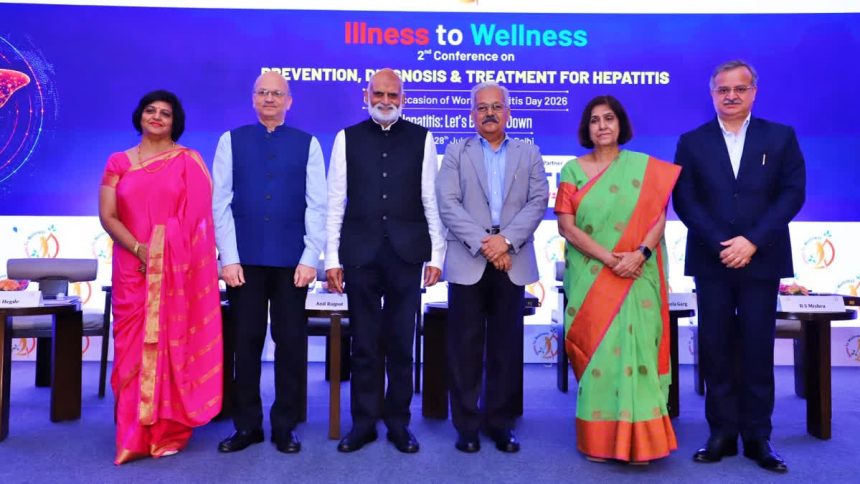
Public health experts have called for urgent steps to eliminate viral hepatitis in India by 2030. They made the appeal at a conference held on World Hepatitis Day, stressing the need for better prevention, early diagnosis and wider access to treatment.
New Delhi: The Illness to Wellness Foundation organised the conference on World Hepatitis Day 2026 under the theme “Prevention, Diagnosis and Treatment for Hepatitis.” Leading policymakers, hepatologists and public health specialists shared insights on how India can move closer to the global goal of eliminating hepatitis as a public health threat.
Rajesh Bhushan, former Secretary of the Ministry of Health and Family Welfare, said India has made progress through the National Viral Hepatitis Control Programme. But he added that more collaboration among stakeholders is needed to make a bigger impact.
Experts highlighted that only a small share of hepatitis B patients in India know their status. They also noted that less than one per cent of eligible people receive antiviral treatment. This gap shows the need for stronger screening, awareness and access to care.
The conference outlined a five-pronged approach to tackle hepatitis. It includes expanding screening and surveillance, ensuring timely birth-dose vaccination, decentralising treatment, increasing community awareness and using real-time data for better planning.
Participants also stressed the importance of adult vaccination, maternal healthcare and prompt diagnosis. They said these steps are key to preventing new infections and reducing liver-related deaths.
World Hepatitis Day, observed on July 28, aims to raise awareness and push for stronger global action. The WHO target calls for a 90 per cent reduction in new infections and 80 per cent treatment coverage by 2030.