


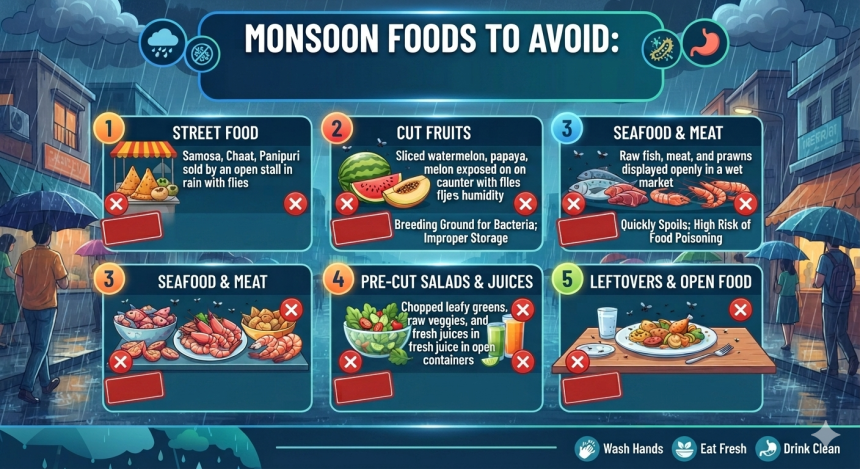
The monsoon season brings relief from the heat, but it also increases the risk of stomach infections and food-borne illnesses. Experts say it is important to be careful with food during this time because humidity, contaminated water and poor storage can quickly spoil meals.
Why monsoon raises risk
During the rainy season, digestion can slow down and bacteria can grow faster in food. That makes food poisoning, diarrhoea, typhoid and other gastro problems more common if people eat unsafe or poorly stored food.
Foods to avoid
Street food is one of the biggest risks in the monsoon. Items like pani puri, chaat, samosas and pakoras may taste tempting, but they are often prepared in unhygienic conditions and can cause infections.
Pre-cut fruits are another common problem. Fruit cups sold outside can become a breeding ground for germs when they sit in the open for too long. It is safer to buy whole fruits and cut them at home.
Raw leafy vegetables such as spinach, lettuce and methi should also be handled carefully. They can trap dirt, bacteria and parasites, so thorough washing and proper cooking are important.
Seafood should be eaten with caution during the monsoon because it can spoil quickly in humid weather. Oily, fried and very spicy foods may also be harder to digest and can trigger acidity or bloating.
What to do instead
Health experts advise people to eat fresh, well-cooked food and to avoid stale leftovers. Drinking safe water, washing vegetables properly and eating from clean, trusted sources can help reduce the risk of infection.