


In a first, scientists at Ahmedabad’s Physical Research Laboratory have matched a lunar meteorite found in Antarctica to the same Moon region explored by Chandrayaan-3’s Pragyan rover
Imagine a rock that was blasted off the Moon by a massive asteroid impact millions of years ago, drifted silently through space, and crash-landed in Antarctica. Now imagine that India — the same country that sent a rover to that exact region of the Moon in 2023 — is the one that figured out where it came from.
That is exactly what has happened, and scientists at Ahmedabad’s Physical Research Laboratory (PRL) are at the centre of it.
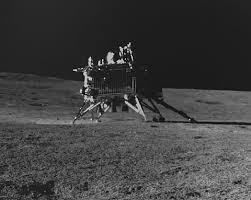
In a remarkable scientific first, researchers have linked Antarctica’s first Indian-recovered lunar meteorite to the southern polar highlands of the Moon — the very patch of lunar ground that Chandrayaan-3’s Pragyan rover explored at Shiv Shakti Point in August 2023.
How Did They Crack It?
The key was a small but powerful instrument that PRL built for the Pragyan rover — the Alpha Particle X-ray Spectrometer (APXS). The APXS measured the abundance of silicon, magnesium, aluminium, calcium, iron and other elements in the lunar soil, producing the first and only direct compositional measurements from anywhere near the Moon’s polar regions.
Those measurements created what scientists call a chemical fingerprint — a unique elemental signature of that specific corner of the Moon. When PRL researchers compared that fingerprint with the Antarctic meteorite’s composition, the match was compelling enough to make history.
Data from 23 measurements across different spots within 50 metres of the Shiv Shakti landing site showed the lunar soil there is remarkably uniform in composition — making it a reliable reference point to match against rocks found on Earth.
The Problem With Moon Rocks on Earth
Here is what makes this discovery so significant. Around 500 lunar meteorites have been found on Earth so far, but they all share one frustrating limitation: the location of their origin on the Moon has always been unknown. Scientists could tell you what the rock was made of, but never where on the Moon it came from. It was a message with no return address.
Chandrayaan-3 has now, for the first time for this class of highland meteorite, provided that return address.
A 4-Billion-Year-Old Story
The science runs even deeper. APXS detected a dominant presence of ferroan anorthosite — ancient crustal rock — which confirms the Lunar Magma Ocean hypothesis. But it also found higher-than-expected magnesium-rich minerals, pointing to deep-layer material that was blasted to the surface when the South Pole-Aitken basin was formed 4.2 to 4.3 billion years ago — the largest known impact event in the entire solar system.
The Antarctic meteorite carries chemical echoes of the same catastrophic event.
PRL scientists had earlier identified signs of primitive lunar mantle material at the Chandrayaan-3 landing site — rock from deep inside the Moon that has remained virtually unchanged since its formation over 4 billion years ago. The meteorite is now physical proof of that finding, sitting in a laboratory on Earth.
India at the Centre of Both Discoveries
What makes this story uniquely Indian is that the same institution — PRL Ahmedabad — is responsible for both ends of the discovery. Their scientists built the rover instrument that mapped the Moon’s surface chemistry. Their researchers are now using that data to trace a meteorite recovered from the ice of Antarctica back to its lunar origin.
Scientists say the Chandrayaan-3 landing site is now considered a top candidate for future sample-return missions, with India well-positioned to lead that work through the upcoming Chandrayaan-4 mission.
The Moon, it turns out, had been sending us clues for millions of years. It just took an Indian rover to help us finally read them.