

Deputy CM races against time as Pushkar festival looms
Rajamahendravaram (Andhra Pradesh) | May 25, 2026
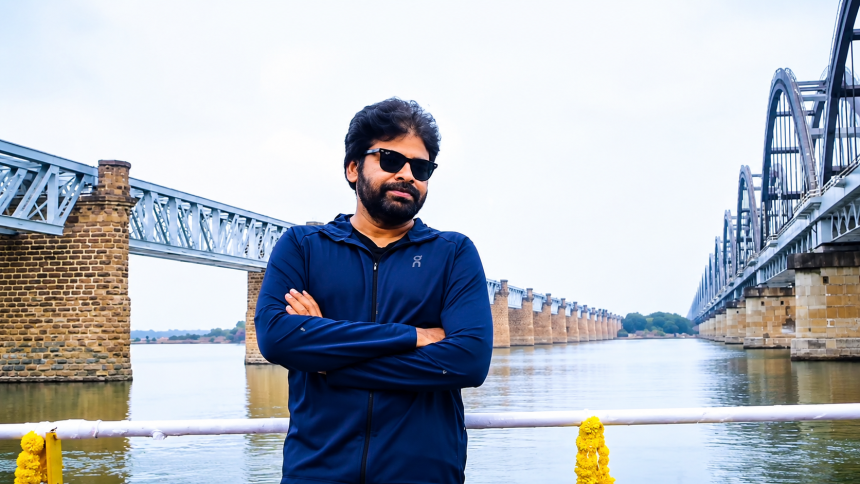
In a high-stakes effort to salvage one of India’s holiest pilgrimages, Andhra Pradesh Deputy Chief Minister Pawan Kalyan on Monday embarked on a specially arranged boat tour of the Godavari river, personally reviewing preparations for the upcoming Godavari Pushkar festival while assessing the extent of pollution affecting its waters.
The inspection, which traversed through some of the most contaminated stretches of the river in Rajamahendravaram, underscored the state government’s determination to reverse years of environmental degradation before millions of pilgrims converge on the sacred site for the festival—a recurring celebration that draws devotees from across the country.
“The Deputy Chief Minister’s visit is not merely ceremonial. It signals that the state government is taking the pollution crisis seriously,” said a senior official from the East Godavari District administration, speaking on condition of anonymity.
Inspection Routes Through Critical Zones
During the approximately two-hour boat journey, Kalyan was briefed by District Collector, Rajamahendravaram Municipal Corporation Commissioner, and other senior officials on the river’s current condition and ongoing remediation efforts. The route covered areas from Pushkar Ghat to Kotilingalu, encompassing zones identified as particularly vulnerable to sewage seepage and industrial discharge.
Officials provided detailed presentations on the state of the Nalla Channel—a critical drainage system that has long been a source of pollution—as well as specific measures being implemented to address water contamination. The briefing included updates on infrastructure upgrades aimed at managing the expected pilgrim influx during the festival.
“The entire visit was structured around understanding ground-level challenges and assessing the feasibility of our cleanup timeline,” the official added.
The Pushkar Problem: A Recurring Crisis
The Godavari Pushkar, held once every 12 years, is one of India’s major pilgrimage events, comparable in religious significance to the Kumbh Mela. The festival attracts millions of devotees who believe that bathing in the river during this period will liberate them from the cycle of birth and death—a belief deeply rooted in Hindu theology and centuries of tradition.
Yet in recent decades, the Godavari has become increasingly burdened by urban pollution, industrial waste, and inadequate sewage management. Tourism and Cinematography Minister Kandula Durgesh acknowledged this challenge in his assessment just days before Kalyan’s inspection.
“The state government’s priority is to conduct the upcoming Godavari Pushkaralu in a pollution-free manner,” Durgesh stated during a separate review meeting held at Kakinada on Saturday.
Environmental experts have long warned that conducting such large-scale religious gatherings on polluted river systems poses both health and environmental risks. The convergence of millions of people on riverbanks already strained by contamination creates ideal conditions for waterborne disease transmission.
“A river that cannot sustain basic aquatic life should not be a pilgrimage destination,” said Dr. Rajesh Patel, an environmental scientist specializing in river systems, in a recent interview. “The question is not whether cleanup is necessary, but whether it can happen in time.”
Action Plan Takes Shape
According to officials briefed during Monday’s inspection, the state government is implementing a multi-pronged strategy:
Immediate Interventions (May-June 2026):
- Intensified cleanup operations along identified pollution zones
- Enhanced monitoring of industrial discharge permits
- Acceleration of sewage treatment infrastructure projects
- Dredging operations in critically silted areas
Medium-Term Measures (July-August 2026):
- Water quality testing at regular intervals
- Temporary restrictions on activities that generate pollution
- Coordination with upstream municipalities for sewage management
- Installation of pollution monitoring systems at key locations
Long-Term Infrastructure (September 2026 onwards):
- Completion of secondary sewage treatment plants
- Renovation of Nalla Channel systems
- Enhanced ghat infrastructure for pilgrim management
- Permanent water quality monitoring mechanisms
Officials stressed that the success of these measures would depend on coordination between multiple agencies—from municipal corporations to environmental departments to national waterways authorities.
2027 Pushkaralu: Scaling Up to Kumbh Mela Standards
The urgency of current cleanup efforts is further magnified by Pawan Kalyan’s ambitious vision for the 2027 Godavari Pushkaralu. The Deputy Chief Minister has directed officials to organize the festival on a scale comparable to the Maha Kumbh—the world’s largest religious gathering.
This means preparing infrastructure for potentially 5-10 million pilgrims over several weeks, a scale that would test the administrative and environmental capacities of the region. Directives have been issued for comprehensive action plans to manage traffic, ensure security, prevent overcrowding at ghats, and maintain sanitation standards.
“Every aspect of the 2027 event is being planned with the lessons from recent Kumbh Melas in mind,” confirmed Kandula Durgesh, the minister overseeing preparations.
Political Dimensions: Centre-State Coordination
The state government’s efforts to rehabilitate the Godavari have gained support from the highest levels of the Union government. Prime Minister Narendra Modi visited Pawan Kalyan’s residence in Hyderabad’s Jubilee Hills on May 10, enquiring about his health following recent surgery and, by extension, signaling political backing for the Deputy Chief Minister’s administrative initiatives.
“His gracious visit to personally enquire about my health reflects his warmth, affection, and humane leadership,” Kalyan wrote on X (formerly Twitter), framing the Prime Minister’s gesture as evidence of collaborative governance between centre and state.
This political alignment is significant. Environmental projects of this scale typically require coordination on funding, regulatory approvals, and resource allocation—elements that benefit substantially from robust centre-state relations.
Expert Assessment: Can Andhra Pradesh Deliver?
The timeline poses challenges that environmental experts are watching closely. A comprehensive cleanup of a river system typically requires multiple years. The Yamuna cleanup project in Delhi, launched decades ago, remains incomplete. The Ganga cleanup initiative, despite massive central funding, continues to struggle with pollution levels in various stretches.
“The Godavari initiative has one advantage: there is political will at the highest levels,” noted water resource management consultant Vikram Singh. “But political will without institutional capacity and adequate funding often results in partial solutions masquerading as comprehensive cleanup.”
Officials, however, express confidence. “We are not aiming for perfection,” the government official said. “We are aiming for standards that are safe for pilgrimage—water that meets basic quality parameters and creates a dignified spiritual experience.”
The Pilgrim Factor
At the heart of this initiative lies the pilgrim—the individual believer who travels often at significant personal cost to visit the sacred river. These are not tourists seeking recreational experiences, but devotees seeking spiritual transformation.
“For many pilgrims, this is a once-in-a-lifetime opportunity,” said Father Mathews, a religious studies scholar at a central university, speaking generally about pilgrimages. “Conducting such events on polluted rivers is not just an environmental issue; it’s a betrayal of the faith that brings people there.”
The Deputy Chief Minister’s personal inspection is designed, in part, to address this—to demonstrate to pilgrims and the broader public that their concerns about river quality are being taken seriously at the highest administrative levels.
What Lies Ahead
The next six months will be critical. Regular updates on water quality measurements, progress on infrastructure projects, and completion of pollution control initiatives will serve as barometers for the success of this effort.
Pawan Kalyan has indicated that monitoring would be rigorous and transparent. “The state government will provide regular progress reports,” officials confirmed following Monday’s inspection.
Whether these commitments translate into measurable improvements in the Godavari’s water quality remains to be seen. What is clear, however, is that Andhra Pradesh is attempting something ambitious: to rehabilitate a major river system while preparing to welcome millions of pilgrims to its banks.
The stakes—environmental, political, and spiritual—could hardly be higher.
IN BRIEF
| Key Points | Details |
|---|---|
| Date of Inspection | May 25, 2026 (Monday) |
| Location | Rajamahendravaram, East Godavari District |
| Inspection Route | Pushkar Ghat to Kotilingalu (by boat) |
| Key Officials Present | Deputy Chief Minister Pawan Kalyan, District Collector, Municipal Commissioner, Senior Officers |
| Focus Areas | Pollution assessment, Nalla Channel condition, Ghat preparation, Infrastructure readiness |
| Festival Timeline | Godavari Pushkaralu 2027 (planned on Kumbh Mela scale) |
| Expected Scale | 5-10 million pilgrims over several weeks |
| Central Government Support | PM Modi’s recent visit signals backing for the initiative |
THE GODAVARI PUSHKAR
The Godavari Pushkar is a major Hindu pilgrimage event held once every 12 years along the banks of the Godavari river in Rajamahendravaram, Andhra Pradesh. According to Hindu mythology and scriptures, bathing in the river during this auspicious period is believed to cleanse one of sins and bestow spiritual liberation.
Historical Significance The festival dates back centuries and is mentioned in various ancient texts and historical records. It is considered one of the four major pilgrimage events in Hindu tradition, along with the Kumbh Mela.
Scale The event typically attracts 2-5 million devotees over a period of several weeks. The 2027 edition is planned to accommodate 5-10 million pilgrims, making it one of the largest religious gatherings in the world.
Administrative Challenge Managing such large crowds requires extensive infrastructure for accommodation, transportation, sanitation, and security. Environmental concerns, particularly water quality, are central to ensuring a safe and dignified pilgrimage experience.