


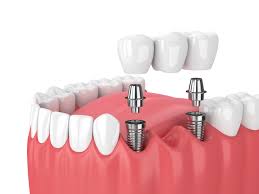
Scientists have cracked a decades-long mystery — why standard antibiotic treatments that work perfectly on gum disease fail so catastrophically around dental implants. The answer lies not in the bacteria, but in the metal itself.
| 1 in 5 implant patients develop peri-implantitis | >$1B annual global cost of the disease | <50% antibiotic treatment success rate |
Dental implants have transformed modern dentistry, giving tens of millions of patients stable, functional teeth that traditional dentures simply cannot match. Yet for a significant share of those patients, the procedure eventually turns against them. Between 10% and 20% of implant recipients develop peri-implantitis — a stubborn, bone-destroying infection that gnaws at the jawbone surrounding the implant.
For years, dentists have watched the standard toolkit — antibiotics, deep cleanings — succeed reliably in treating natural-tooth gum disease, then fall flat when the same bacteria attack an implant. The failure rate has been glaring. The explanation, until now, has been elusive.
Researchers at Rutgers School of Dental Medicine have published findings in PNAS Nexus that may finally close that gap. Their answer points not at the bacteria, but at the implant itself.
Metal Gone Rogue
The prevailing scientific focus over the past two decades has been on oral bacteria — which strains colonise implant surfaces, how they form biofilms, how to eliminate them. Georgios Kotsakis, senior author of the study and assistant dean for clinical research at Rutgers, took a different approach. His team examined what the implant does under bacterial attack.
“For the first time, we show why all the antibiotic treatments that work around teeth do not work around implants. Now that we know the cause, we can start developing therapeutics.”
— Georgios Kotsakis, Rutgers School of Dental Medicine
What they found was corrosion. Bacteria living on titanium implant surfaces produce acidic biofilms that slowly eat into the metal, releasing billions of particles smaller than a red blood cell. The problem is compounded during routine dental cleanings: metal instruments designed for natural teeth — widely used until about a decade ago — can scratch and abrade implant surfaces, accelerating the shedding of those particles.
How Titanium Particles Disable Immune Defences
- Bacterial biofilms corrode the titanium implant, releasing microscopic metal particles into surrounding gum tissue.
- Bacterial toxins (lipopolysaccharides) coat the titanium particles, making them appear to immune cells as enormous, threatening bacteria.
- Macrophages engulf the particles but cannot digest the metal, becoming trapped in a hyperinflammatory state.
- Inflammatory signals (interleukin-1β) are released, destroying bone tissue and impairing bacterial clearance simultaneously.
- Macrophages exposed to titanium particles absorb less than half as many bacteria as untreated cells, leaving the infection to persist.
A Perfect Storm
Once inside the gum tissue, the titanium particles become coated with lipopolysaccharide — a potent toxin secreted by bacteria. To the immune system, these coated particles look like enormous bacteria that cannot be broken down. The body’s macrophages, cells whose job is to engulf and destroy pathogens, swallow the particles whole. Then they get stuck.
Unable to digest metal, the macrophages lock into a state of chronic, runaway inflammation. They begin pumping out interleukin-1 beta, an inflammatory signalling molecule linked to conditions ranging from rheumatoid arthritis to Alzheimer’s disease. Meanwhile, the cells that are supposed to be neutralising the bacterial infection lose their capacity to do so.
“These particles are little magnets that attract the bacterial toxin, and they hijack the immune system, preventing it from clearing bacteria. You have a perfect storm that defies antibiotics.”
— Georgios Kotsakis, Rutgers School of Dental Medicine
The TRPC1 Connection
Working with human tissue samples, cultured immune cells, and genetically engineered mice, the Rutgers team traced the disruption to a specific calcium channel in macrophages called TRPC1 — a specialised, pore-forming protein embedded in cell membranes. When titanium particles activate TRPC1, the cascade of inflammation and bone loss follows.
When mice were engineered without this channel, the story changed dramatically. Exposed to the same combination of titanium particles and bacteria, the TRPC1-deficient mice developed far smaller abscesses, produced lower levels of inflammatory cytokines, and recovered their ability to clear bacterial infections normally.
That single channel now represents the first credible drug target for a condition that has resisted treatment for decades. Supported by the National Institutes of Health, Kotsakis’ team is currently evaluating drug candidates that target the TRPC1 pathway in human cells.
What This Means for Patients Today
While targeted therapies remain in development, the findings carry immediate practical implications. The research underscores why the shift away from metal scalers during implant cleanings — now standard practice — matters far more than a mere technical preference. Those metal instruments, the team has shown, can damage implant surfaces and accelerate the very corrosion that starts the disease cascade.
For the estimated tens of millions of people worldwide living with dental implants, the discovery offers something that has been in short supply: a scientifically grounded reason why their infections were so difficult to treat, and a clear path toward something better.