


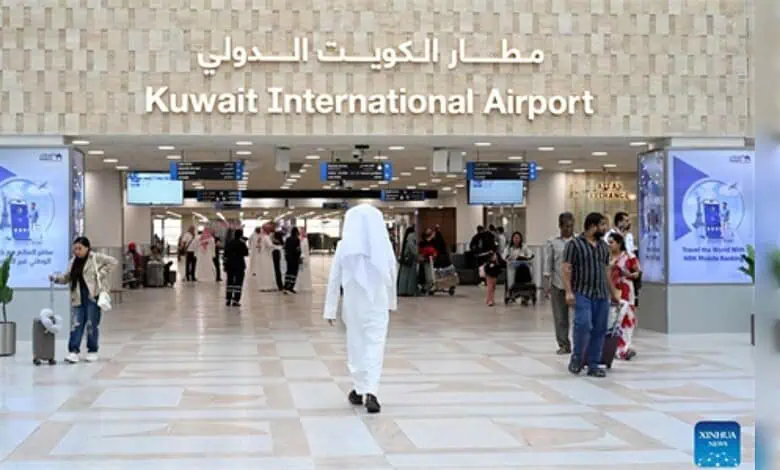
In one of the most significant strikes on civilian infrastructure since the conflict began, Iranian drones and missiles slammed into Kuwait International Airport’s Terminal 1 on Wednesday morning — sending shockwaves across the Gulf.
Day 96 of US-Israel-Iran War | Terminal 1 Hit | All Flights Suspended & Diverted
An airport. In the middle of the day. Packed with travellers. That is what Iran targeted on Wednesday, June 3 — sending drones and missiles crashing into Terminal 1 of Kuwait International Airport in one of the most brazen escalations of a conflict that has already upended the Middle East for nearly 100 days.
Several people were injured. All flights were immediately suspended. Incoming aircraft were diverted to alternative destinations. And across the Gulf, governments watched and held their breath — because if an international airport is now a target, nowhere is truly safe.
Kuwait’s General Civil Aviation Authority confirmed the strike caused substantial damage to airport infrastructure and activated full emergency response measures. Technical teams were deployed to assess damage before any resumption of operations.
What happened on the ground
Iranian drones and missiles struck Terminal 1 of Kuwait International Airport on Wednesday morning. Several people were injured; official casualty figures have not yet been released. All departures were suspended and incoming flights diverted to alternative airports until further notice. Emergency teams were deployed and the Kuwait Army activated, coordinating with civil authorities.
“Criminal Iranian aggression which resulted in significant material damage to the building and injuries.” — Brigadier-General Saud Abdulaziz Al-Otaibi, Kuwait Defence Ministry Spokesman
A war that is getting closer to civilians
Wednesday’s strike did not happen in a vacuum. It came just hours after a volatile Tuesday night in which the United States military said it had carried out attacks on an Iranian military facility following missile launches aimed at Kuwait and Bahrain. US Central Command reported that two missiles directed at Kuwait failed before reaching their targets, while air defences intercepted projectiles aimed at Bahrain. American forces also shot down several drones targeting US military personnel in Kuwait.
Despite that interception, Wednesday morning brought fresh horror. The airport — which had only just resumed operations on Monday, June 1, following a phased reopening after earlier disruptions — was struck again before the week was even half over.
It is a chilling pattern: infrastructure that civilian life depends on, reopening cautiously, only to be hit again. For the millions of people across the Gulf with family members, businesses and travel plans tied to Kuwait, Wednesday’s strike is not an abstract geopolitical event. It is a crisis at their doorstep.
How we got here — the road to Day 96
Day 1 — The American-Israeli war on Iran erupts, triggering a cascade of military escalations across the Middle East.
Earlier — Kuwait International Airport suffers disruptions linked to the conflict. Authorities carry out repairs and plan a phased reopening.
June 1 — Airport reopens after repairs. Relief is short-lived.
June 2 night — The US military strikes an Iranian military facility after missiles are launched toward Kuwait and Bahrain. Two missiles targeting Kuwait fail; others are intercepted.
June 3 — Iranian drones and missiles hit Terminal 1. Several injured. All flights suspended. Day 96 becomes the most alarming day for Gulf civilians yet.
What this means for the wider region
An airport attack carries symbolism that a military base strike does not. Airports are, by their nature, the most internationally visible civilian infrastructure a country possesses. Striking one sends a message that travels instantly — to governments, airlines, insurance markets, and ordinary people planning whether it is safe to fly.
For Kuwait, a country that has thus far navigated the conflict with caution, Wednesday’s strike represents a direct, undeniable drawing into a war it did not start. The Kuwait Army says it is “monitoring developments closely” and will take “necessary steps to protect national security.” What those steps look like in the days ahead could shape the trajectory of a conflict that has already lasted 96 days and shows no sign of cooling.
Officials have not yet confirmed the full number of casualties or when normal airport operations will resume. The investigation is ongoing. The war continues.
And for the people who were inside Terminal 1 on Wednesday morning — travellers who arrived at an airport simply hoping to get somewhere — the conflict stopped being distant news and became something they will carry with them for the rest of their lives.