


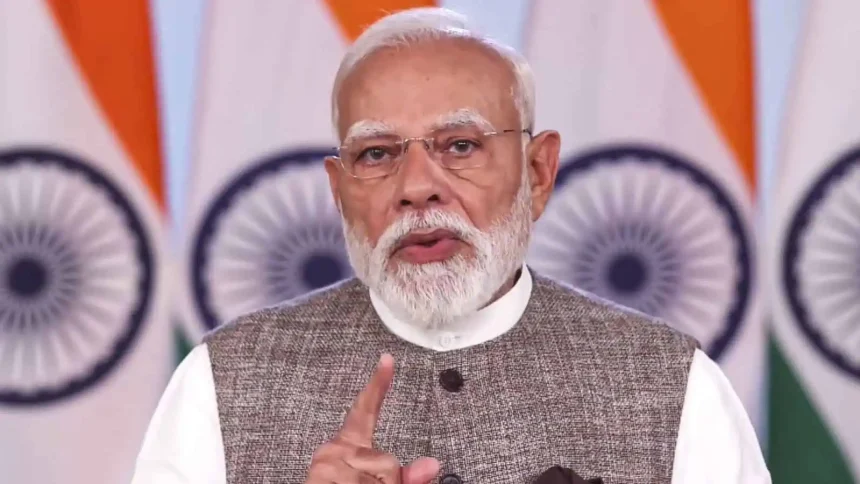
New Delhi: In a decisive move aimed at curbing the growing menace of examination paper leaks, Prime Minister Narendra Modi on Thursday announced the establishment of fast-track courts to ensure swift and stringent punishment for those involved in such cases. The announcement comes amid nationwide protests led by students and civil society groups demanding accountability following the recent NEET-UG paper leak controversy.
A stern warning to culprits
Taking to social media platform X, PM Modi emphasized that nothing is more important than the welfare and future of India’s youth. “We have decided to set up fast-track courts to ensure swift and stringent punishment for those involved in paper leaks,” the Prime Minister said, adding that he has directed concerned authorities and officials to take all necessary steps in this regard.
Modi’s statement carried a clear warning: “Those who try to harm the future of our youth will not be spared.”
Why this matters
The decision marks the government’s first direct public response to the intensifying student protests over the NEET-UG paper leak and other irregularities in the education system. By introducing fast-track courts, the government aims to expedite investigations and trials, ensuring that those responsible for undermining the integrity of competitive exams face immediate legal consequences.
What are fast-track courts?
Fast-track courts are special judicial bodies established to speed up the disposal of pending cases, particularly in matters requiring urgent attention. In the context of paper leak cases, these courts will prioritize the trial of accused individuals, reducing the time taken for justice delivery from years to months. The expectation is that swift convictions and harsh penalties will act as a strong deterrent against future exam fraud.
Student protests and political pressure
The announcement follows weeks of sustained protests by the Cockroach Janta Party (CJP) and other student organizations, who have been demanding the resignation of Education Minister Dharmendra Pradhan over alleged lapses in the examination system. While welcoming the PM’s assurance, CJP leaders reiterated that the Education Minister must step down to restore public trust.
Government’s broader commitment
PM Modi’s statement underscored that the fast-track court initiative is part of a series of measures aimed at safeguarding students’ interests. The government has repeatedly emphasized its commitment to protecting the future of young aspirants and ensuring that competitive examinations remain fair and transparent.
What’s next?
The effectiveness of the fast-track courts will depend on how quickly they are operationalized, how efficiently investigations are conducted, and whether convictions follow in major paper leak cases. For now, students and parents across the country are watching closely, hoping that this bold step will bring an end to the cycle of leaks, re-exams, and shattered dreams.
As the nation awaits further details on the implementation of these courts, one message is clear: the government is sending a strong signal that compromising the future of India’s youth will no longer be tolerated.