


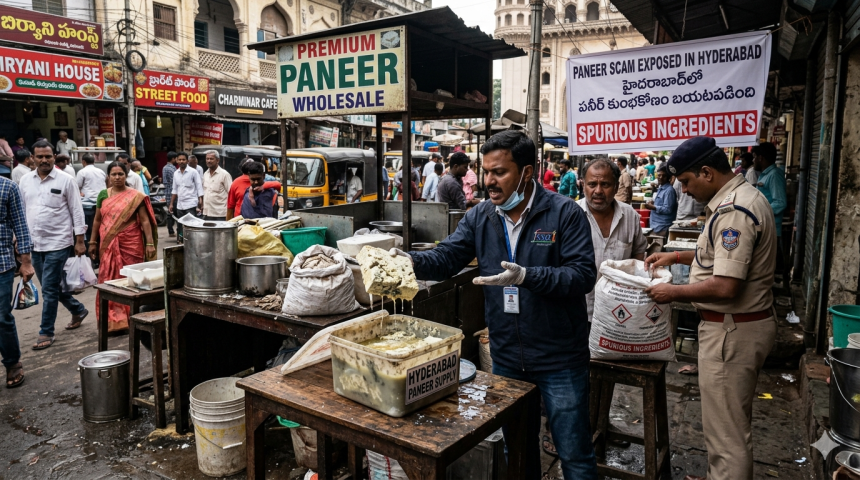
A major food safety crackdown in Hyderabad has thrown the city’s paneer market into the spotlight, exposing a growing racket where cheese analogue products are allegedly being sold as paneer. In raids across outlets and manufacturing units, officials seized around 825 kg of suspected adulterated and misbranded food products, raising serious concerns about what consumers are actually putting on their plates.
The issue is not just about mislabeling. It points to a wider network of deception involving improper branding, missing batch details, invalid licences and unsafe storage practices that can put public health at risk.
What Officials Found
Authorities say some businesses are buying cheese analogue products made from vegetable fats and non-milk ingredients and passing them off as paneer, malai paneer or milk paneer. In many cases, the products are sold with misleading tags such as “low fat paneer,” “medium fat paneer” or “fresh paneer,” even when the required details are missing.
Inspections also found that some shop owners and manufacturers were operating without valid food licences. In certain instances, the same product was reportedly repacked and sold under premium-sounding names, creating the impression of a high-quality dairy item.
Why This Is A Big Problem
Paneer is a staple in many homes and restaurants, which makes this kind of deception especially alarming. Consumers expect a dairy product, but instead may be unknowingly paying for a substitute that is cheaper to make and potentially misleading to buy.
Officials have also flagged adulteration practices such as adding starch, excess water, poor-quality milk, non-milk fats and even non-food-grade substances. These shortcuts may help businesses cut costs, but they can also expose people to food poisoning, allergies and other health risks.
The Profit Behind The Fraud
What makes the story more disturbing is the motive. Manufacturers may label these products correctly at the production stage, but at the retail level, they are sometimes sold as paneer to increase profit margins.
That extra margin is exactly what makes this kind of fraud difficult to stop. When a low-cost substitute can be sold as a premium food item, the temptation to cheat becomes hard to resist unless enforcement is strict and continuous.
What Consumers Should Watch For
Officials are urging people to buy paneer only from licensed vendors and to check labels, expiry dates and batch details carefully. Loose, unlabelled or repacked products should be treated with suspicion.
For consumers, the safest approach is to stay alert and ask questions before buying. If a product looks too cheap, is sold without proper packaging or lacks traceability, it may not be worth the risk.
Crackdown Continues
The raids are part of a larger enforcement drive, and more samples are now being tested. Those found violating food safety rules are likely to face strict legal action.
For now, the message from authorities is clear: selling a substitute is not the problem, but selling it as paneer is. And in a city where food trust matters, that difference could decide whether businesses survive or get shut down.