


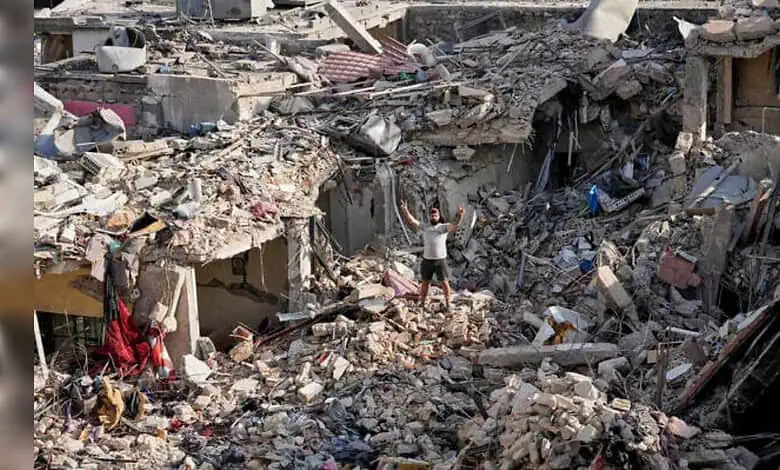
The guns in southern Lebanon did not pause for diplomacy this week. As negotiators in Switzerland scrambled to keep a fragile Iran-US understanding alive, Israeli forces struck across the south of the country overnight Thursday into Friday, leaving at least 16 people dead and reigniting fears that the region’s uneasy calm is unravelling faster than anyone can broker peace.
A Night of Fire in the South
According to Lebanon’s state-run National News Agency, at least 16 people were killed in the latest round of Israeli airstrikes, while Israel’s military said its forces struck targets throughout southern Lebanon overnight as Hezbollah reported intense fighting in the area.
The image that has come to define the moment: a resident in Nabatiyeh, picking through the rubble of what was once his home, weeks after a ceasefire was supposed to have ended exactly this kind of devastation. It’s a scene that has repeated itself too many times in this conflict — a truce announced, a calm assumed, and then the ground shakes again.
Diplomacy on Pause
The timing could hardly be worse for peacemakers. Planned talks in Switzerland between Iran and the United States, aimed at reaching a permanent end to the Iran war, were delayed just as the strikes intensified — a reminder that battlefield reality has a way of overtaking conference-room ambition.
At the heart of the impasse sits an old and stubborn dispute: Israel’s occupation of southern Lebanon and its continued operations against the Iranian-backed Hezbollah have remained central sticking points in the negotiations. Israel insists it needs to keep its grip on the territory and the freedom to act against Hezbollah, which it accuses of launching attacks into northern Israel. Hezbollah, for its part, shows no sign of standing down either.
It’s a familiar standoff — both sides convinced that pulling back first means losing everything.
Khamenei Breaks His Silence
Thousands of kilometers away in Tehran, a different kind of signal emerged. Iran’s Supreme Leader weighed in publicly for the first time on the recent understanding reached between Tehran and Washington, choosing his words carefully. Direct talks with the US, he indicated, would happen — but not, in his framing, on Washington’s terms. “It is obvious that the face-to-face negotiations that will be held in the future will not mean accepting the enemy’s opinion”, he said in a statement carried by state media Thursday night.
Notably, this marked his first public reaction since the deal was struck — and his first appearance in any form since reportedly being wounded when the war first broke out. For a region starved of clarity, even a single guarded sentence from Tehran carries weight.
The Strait Reopens, Cautiously
Amid the grimness, one thread of de-escalation did emerge. The US military formally lifted its blockade on Iranian shipping, a move confirmed via a US Central Command social media post. The numbers tell their own story of just how tightly the noose had been drawn: 12.5 million barrels of oil passed through the Strait of Hormuz on Wednesday alone, with more than a dozen ships allowed through the naval blockade, according to Vice President JD Vance.
But Washington isn’t fully stepping back. US Central Command said Navy vessels would remain in the region to ensure all aspects of the agreement are followed, with more than a dozen ships currently deployed there. Trust, it seems, is being extended one tanker at a time — and only under close watch.
The Bigger Picture
What emerges from these three threads — bombs in Lebanon, a wary statement from Tehran, and a cautiously reopened shipping lane — is a region trying to walk two directions at once. Economically and diplomatically, there are flickers of an off-ramp. Militarily, the fighting hasn’t read the memo.
For families in Nabatiyeh sifting through debris this morning, the geopolitics in Switzerland will matter only when the strikes actually stop. Until then, ceasefire remains a word that exists more on paper than on the ground.