

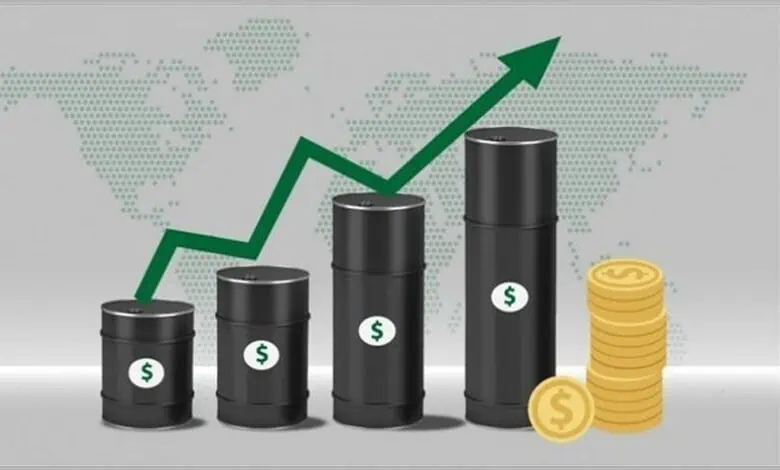
Washington/New Delhi: Global oil markets reacted with immediate volatility on Monday, as Brent crude jumped 2.4% to cross $94 per barrel and US spot crude rose 2.2% to $89.50, following President Donald Trump’s shadowed warning that the US is considering “fresh military action” against Iran amid intensifying tensions over the Strait of Hormuz.
The surge comes as Trump’s administration signals a potential shift from diplomatic pressure to direct military intervention, deepening investor fears that the world’s most critical oil chokepoint could face disruption.
Trump’s Threat: “Nuclear Deal or Else”
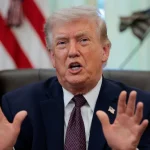
Speaking to reporters at the White House, Trump said the US was “seriously evaluating all options” including targeted strikes to halt Iran’s nuclear program if Tehran refuses a deal.
“Iran is dying to make a deal,” Trump stated, “but they cannot be nuclear. If they don’t agree soon, we may have to act.”
The remark follows days of Iranian statements threatening to close the Strait of Hormuz—a narrow waterway through which nearly 20% of the world’s seaborne oil flows—unless the US lifts its naval blockade of Iranian ports.
Markets React: Analysts Warn of “Geopolitical Premium”
Investors are pricing in a “geopolitical risk premium” of $3–5 per barrel, with analysts warning that any closure of the Hormuz strait could push crude prices above $110 within 48 hours.
“The market is pricing in a worst-case scenario. Even the threat of Hormuz disruption is enough to send prices soaring,” said Rajeev Misra, chief energy analyst at Global Markets Institute.
Oil-exporting nations are watching closely: India, which imports over 85% of its crude via Hormuz, could face a ₹4–6 per litre rise in petrol and diesel prices if supplies are constrained.
Iran’s Hardline Stance: “No Permission Needed”
Iran’s foreign minister, Abbas Araghchi, reiterated Tehran’s stance at the BRICS summit last week: the strait is open to all commercial ships if they cooperate with Iran’s navy.
“Iran’s missile capability and defense are not containable or permission-based,” Araghchi said. “Any aggression will face an immediate, harsh response.”
US Central Command has since repositioned aircraft carrier strike groups and B-52 bombers to the region, while Secretary of State Marco Rubio held urgent talks with Israeli leaders over potential coordination.
What This Means for India and Global Energy Security
| Impact Area | Potential Effect |
|---|---|
| Petrol prices in India | Could rise ₹4–6 per litre within days |
| Diesel costs | Logistics and freight charges may surge |
| Inflation | Food and transport inflation could accelerate |
| Currency | Rupee may face pressure amid rising import bill |
The Stakes Are Higher Than Ever
As Trump’s “fresh action” threat hangs over the Gulf, the world braces for a possible collision between diplomacy and military force. The Strait of Hormuz remains the linchpin: closure means global energy shock; openness means fragile peace.
For now, investors, policymakers, and commuters in cities like Hyderabad, Mumbai, and Delhi are watching the oil gauges closely—because in today’s interconnected world, a crisis in the Gulf can empty your fuel tank before you even reach the pump.