

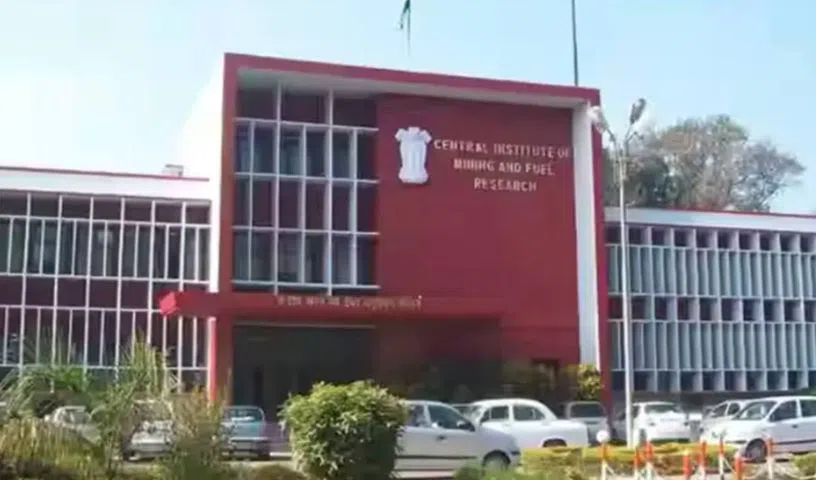
Planting trees in a crowded city is easier said than done — there’s often no soil, no space, and no time to wait for saplings to grow. Researchers at the CSIR-Central Institute of Mining and Fuel Research (CIMFR) in Dhanbad think they’ve found a workaround: a tree that doesn’t need land at all, just water, light, and algae.
A Tree Without Roots
The device is called the Smart Algal Liquid Tree, or SALT, and its developers describe it as India’s first mobile version of the technology. Instead of leaves and bark, the unit houses microalgae suspended in water inside a sealed container. As the algae photosynthesize, they pull carbon dioxide out of the surrounding air and release oxygen — doing, in essence, the same job a tree does, just without the trunk.
Vetrivel Anguselvi, the senior principal scientist at CIMFR who led the project, said the goal was to tackle poor air quality in crowded, space-starved urban areas where planting large trees simply isn’t feasible.
Already Running in the Field
This isn’t just a lab prototype. The patented system has already been set up at CIMFR’s own campus in Dhanbad and at Northern Coalfields Limited in Singrauli, Madhya Pradesh, with what researchers describe as positive early feedback.
Beyond its core function, the unit does double duty. It also helps cut down dust and can run continuously, drawing on either natural sunlight or artificial light. Built-in sensors track air quality, CO2 levels, temperature, humidity, and particulate matter in real time — turning it into a live air-quality monitor as well as a purifier.
More Than Just an Air Filter
Part of the appeal is that SALT isn’t purely functional — it’s designed to be useful in ways that make people want it in a park or bus stand in the first place. The mobile unit runs on solar power or electricity, and doubles as public infrastructure, offering shaded seating for four to eight people along with charging points for phones and laptops.
Anguselvi said the technology is aimed at industrial zones as well as public spaces like schools, airports, railway stations, bus terminals, shopping malls, parks, and theatres — essentially anywhere air quality is poor and planting greenery isn’t an option.
Why Algae Instead of a Real Tree
Unlike a conventional tree, the enclosed algae system needs no soil, is less vulnerable to urban pollution and pests, and requires only minimal upkeep — a practical advantage in dense cities where maintaining green cover is often a losing battle against construction, pollution, and limited space.
What Comes Next
CIMFR officials say talks are already underway to bring the device into commercial production, with an eye on pricing it affordably enough for use in individual homes and neighborhoods hit hardest by air pollution.
If that rollout happens, SALT could offer a rare thing in urban environmental tech: a solution that’s mobile, low-maintenance, and deployable almost anywhere — no soil, no years of growth, and no waiting for a sapling to become a tree.