


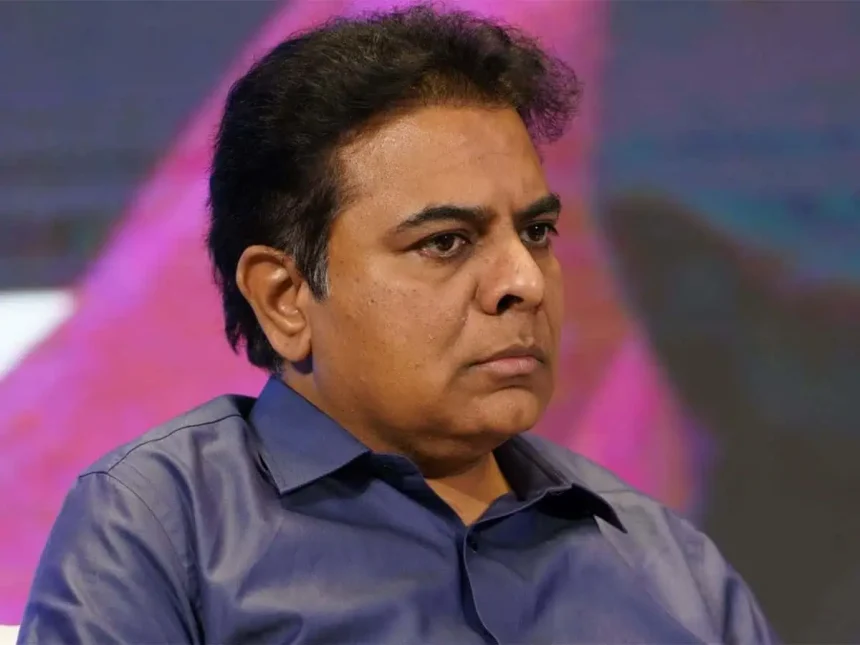
BRS working president K.T. Rama Rao has sparked a fresh political debate by drawing a parallel between Nepal’s Gen Z protests and India’s CJP demonstrations. His remarks come at a time when youth-led movements, political anger and protest rights are once again dominating public discussion.
KTR’s warning
KTR’s core message is that governments cannot afford to ignore the aspirations of young people. He argued that when democratic voices are dismissed or mocked, frustration can grow into a larger street movement.
His reference to Nepal’s Gen Z protests adds weight to that warning. In his view, what began there as a youth-led expression of anger eventually grew into a powerful political force after being underestimated at first.
Why the comparison matters
By linking Nepal’s experience to India’s CJP protests, KTR has placed two very different movements in the same conversation. The comparison is politically loaded because it touches on youth discontent, protest culture and the state’s response to dissent.
The comment also reflects a broader concern that unemployment, education pressure and unmet expectations can create anger among young citizens. That is what makes the remark resonate beyond one party or one rally.
Political reaction likely
Such a statement is bound to trigger sharp responses from rival parties. Opponents may see it as alarmist, while supporters will likely frame it as a warning that should not be ignored.
That tension is part of why the quote is likely to travel fast online. In today’s political climate, comments that connect local protests to larger regional upheavals often generate immediate attention and debate.
A youth-centered message
At its heart, KTR’s remark is about the power of youth voices. He is signaling that young people are no longer passive observers and may turn into a decisive political force if they feel shut out.
Whether viewed as a caution or a provocation, the comparison has already succeeded in drawing attention to the frustrations of a generation that wants more opportunity, dignity and space in public life.