


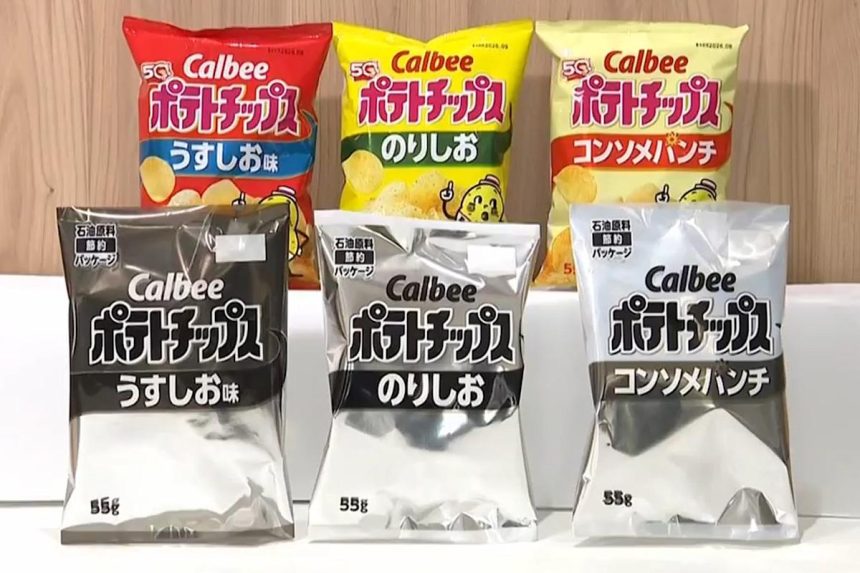
Japan’s leading snack maker Calbee said it will strip colour from 14 popular products and switch to two‑colour packaging as supply snarls tied to the war in Iran push up costs and cut availability of key ink ingredients.
Tokyo-based Calbee said the temporary design change — rolling out from late May — aims to keep products on shelves while conserving naphtha-derived printing materials used in coloured inks.
The move affects well‑known lines including Potato Chips, Kappa Ebisen and Frugra cereal, and will see their familiar bright bags replaced by stark monochrome versions for the duration of the squeeze.
The disruption traces to rising naphtha prices and limited shipments after the conflict around the Strait of Hormuz disrupted Middle East oil flows, tightening supplies of solvents and resins essential to industrial inks.
Naphtha is widely used in manufacturing inks for high‑speed, multi‑colour packaging presses; when its availability falls, printers and brand owners face higher costs and production bottlenecks.
“We aim to ensure stable shipments for customers while the supply environment remains unstable,” Calbee said in a statement explaining the packaging revision.
Japan’s government says it has not seen immediate nationwide shortages but is monitoring companies affected and holding fact‑finding talks with industry to assess risks.
Industry analysts say the shift is a practical, low‑cost workaround that avoids halting production or passing steep price rises to consumers. “Monochrome packaging is a short‑term fix that preserves logistics and brand continuity without compromising supply,” said a Tokyo packaging expert.
Retailers note the visual change may confuse shoppers briefly, but many expect the brand’s strong recognition will carry sales through the temporary makeover.
Beyond aesthetics, the episode highlights how geopolitical shocks can ripple into unexpected corners of consumer life — from gasoline to the colours on snack shelves.
If tensions persist, more manufacturers that rely on oil‑derived inputs could follow suit, pushing companies to seek alternative solvents, regional suppliers, or longer‑term redesigns.
The Calbee decision offers consumers a visible reminder that global supply chains are tightly linked: a flare-up thousands of kilometres away can make supermarket aisles look suddenly different.