

As US and Iranian forces exchange strikes and a two-month ceasefire teeters on the edge, the White House says diplomacy is still very much alive. But no one is calling it a sure thing.
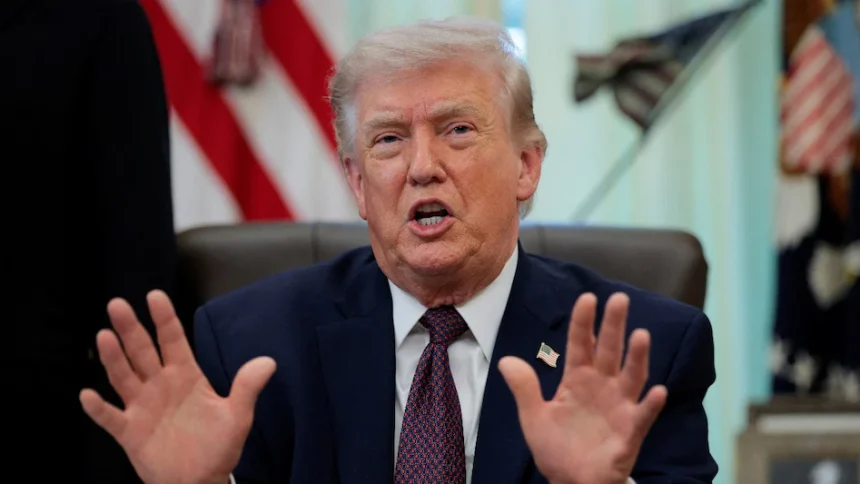
WASHINGTON — In one of the stranger diplomatic paradoxes of the modern era, the United States and Iran are simultaneously hurling missiles at each other and shaking hands across the negotiating table. On Monday, President Donald Trump insisted the contradictions don’t trouble him at all.
“Talks are continuing, at a rapid pace, with the Islamic Republic of Iran,” Trump wrote on Truth Social on June 1 — even as fresh Iranian strikes threatened the fragile, nearly two-month-old ceasefire that both nations had publicly committed to.
“They’re better negotiators than they are fighters.” — President Donald Trump, in a call with NBC News
The remark — breezy, characteristically Trumpian — came moments after he told NBC News he had not even been informed when Iranian officials suspended the negotiations. “It doesn’t mean we’re going to go and start dropping bombs all over there,” he added, with the casual confidence of a man who believes every crisis is simply a deal waiting to happen.
What You Need to Know
- The US–Iran ceasefire, agreed nearly two months ago, has been repeatedly tested by cross-border strikes
- Trump called Israeli PM Netanyahu directly after Israel ordered fresh attacks on Beirut suburbs
- Trump also spoke with Hezbollah representatives, securing assurances that all shooting would stop
- No US troops will be deployed to Beirut, Trump confirmed — reversing what appeared to be imminent deployment
- Israel marked its deepest incursion into Lebanon in 26 years over the weekend
But behind the bravado lies a situation that is deeply, dangerously unresolved. The ceasefire between the United States and Iran has become something of a diplomatic fiction — observed in name, shattered in practice. Both militaries exchanged strikes over the weekend and into Monday, each attack threatening to become the spark that ends talks entirely.
Yet negotiators press on. And Trump, never one to let a crisis go to waste, is working the phones with unusual energy. He confirmed that he spoke directly with Israeli Prime Minister Benjamin Netanyahu shortly after Netanyahu ordered attacks on the Hezbollah-controlled southern suburbs of Beirut — a move that threatened to widen the conflict dramatically.
“There will be no troops going to Beirut, and any troops that are on their way have already been turned back.” — President Donald Trump, via Truth Social
The Hezbollah Angle
In a disclosure that will raise eyebrows across the diplomatic world, Trump said he also held what he called a “very good” call with Hezbollah — through what he described as highly placed representatives — and secured a mutual commitment: Hezbollah would stop firing, and Israel would stand down against them.
Whether those assurances hold is a different question entirely. The ceasefire has been tested so many times in recent weeks that analysts are beginning to wonder whether it was ever real — or simply a pause that allowed both sides to reload.
The broader talks remain shrouded in uncertainty. It is not clear how close Washington and Tehran are to a formal agreement, and every exchange of fire carries the risk of collapsing whatever goodwill diplomats have managed to build. The stakes could not be higher: a deal could reshape the Middle East for a generation; a breakdown could ignite a war with no clear endgame.
For now, Trump’s message to the world is defiantly optimistic. The talks are fast. The deals are coming. The bombs, he implies, are just noise. Whether history vindicates that confidence — or condemns it — may be decided in the coming days.