


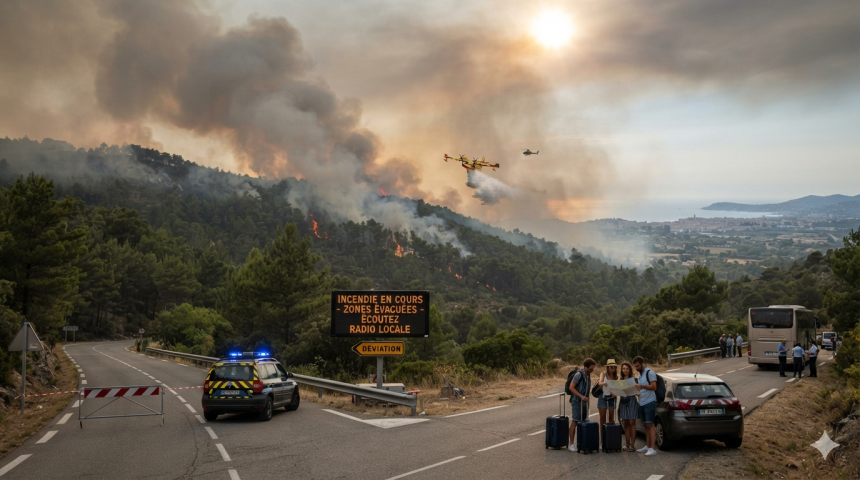
Summer in southern France has taken a dangerous turn, with wildfires forcing evacuations, disrupting travel plans and casting a smoky haze over some of Europe’s most popular holiday landscapes. For many travellers headed to the French Riviera, Provence or nearby countryside retreats, the question now is not just what to see — but whether it’s safe to go at all.
Here’s a clear, traveller-focused look at what’s happening and how to navigate plans if you’re booked to visit the region.
What’s happening on the ground
Unseasonably dry conditions and strong winds have helped fuel wildfires across parts of southern France, including forested and rural areas that sit close to tourist zones. Firefighters have been deployed in large numbers, and some local authorities have ordered precautionary evacuations from campsites, villas and small towns as a safety measure.
While not every tourist hotspot is directly affected, the fires are close enough in some areas to impact air quality, visibility and road access. In a few pockets, residents and visitors have been moved to temporary shelters as a precaution.
How this affects travel
For travellers, the immediate impact can show up in several ways:
- Road closures and diversions on regional highways and country roads
- Temporary shutdowns of campsites, nature lodges and rural stays
- Reduced access to hiking trails, forests and natural parks
- Smoky conditions that can affect outdoor plans and photos
Major cities and coastal hubs may remain open and functional, but day trips into affected inland areas could be restricted or cancelled at short notice.
Should you cancel your trip?
Whether to cancel depends largely on where you’re headed:
- If your stay is in a directly affected rural or forest area, your accommodation provider is the first contact point. They will usually inform you if they are closed, evacuating or advising postponement.
- If you’re staying in larger cities or coastal towns, you may still be able to travel, but you should expect possible changes to excursions and nearby attractions.
Instead of cancelling immediately, many travellers are opting to modify itineraries — swapping nature-heavy plans (hikes, countryside stays, camping) for city or coastal stays where conditions are more stable.
What airlines and hotels are doing
In similar situations, airlines and rail operators generally continue services unless airports or lines are directly affected. However, they may issue travel advisories urging passengers to check the status of their destination before departure.
Hotels and rental hosts in impacted zones often:
- Offer date changes or credits
- Help guests reroute to safer areas
- Provide real-time local updates via email or messaging
If you’ve booked through an online travel portal, check the platform’s disruption or force majeure policy — wildfire-related changes are sometimes treated more flexibly than standard voluntary cancellations.
Safety tips if you’re already there
If you’re currently in southern France or due to arrive in the next day or two:
- Follow local instructions: If authorities ask you to evacuate or avoid certain zones, do so immediately.
- Stay informed: Rely on official local channels, your hotel and tour operator rather than rumours or social media alone.
- Avoid fire zones: Don’t try to “sightsee” near affected areas; conditions can shift quickly and roads may be needed for emergency services.
- Mind air quality: Those with asthma or respiratory issues should limit time outdoors if smoke levels rise and keep medications handy.
How to adjust your itinerary smartly
If your original plan involved countryside stays, vineyards, or hilltop villages now affected by wildfires, consider:
- Moving to coastal towns less exposed to fire risk
- Spending more time in larger cities with better infrastructure
- Swapping outdoor-heavy activities for museums, food tours and cultural experiences
Many travellers are treating this as a chance to explore alternate sides of southern France — urban markets, coastal promenades and historic quarters — while staying clear of risk zones.
Wildfires in southern France are a serious safety issue, but they don’t automatically mean every trip must be cancelled. The key is location-specific information, flexible planning and a safety-first mindset.
If you share your exact destination and travel dates, I can help you rewrite a traveller advisory-style article or a shorter explainer tailored for your news site’s audience.