


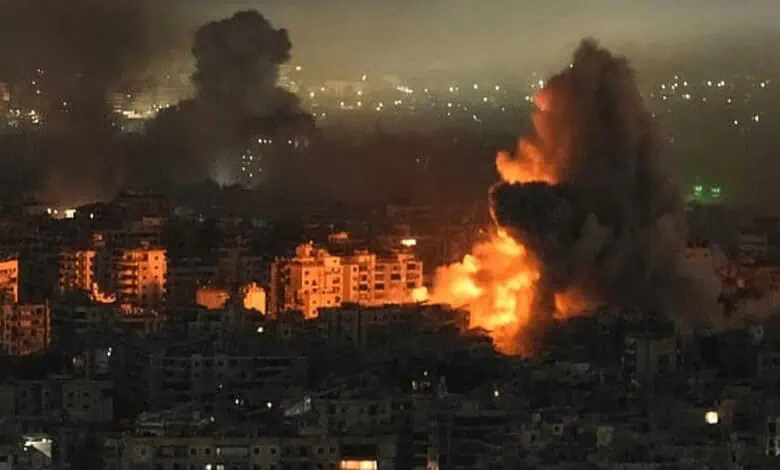
There’s a particular cruelty to a ceasefire that doesn’t hold. It raises hope, sends families back to inspect what’s left of their homes, and then, without warning, the skies open up again. That’s roughly what southern Lebanon woke up to this Friday.
Picture it: a man walks back into Nabatiyeh, the town he once called home, after officials announced a truce was in effect. He’s not looking for valuables — there’s nothing left worth saving. He’s just standing in what used to be his living room, now a flattened field of concrete and twisted rebar. That image, captured by photographers on the ground, has become the unofficial portrait of this entire chapter of the conflict — quiet devastation, repeated on a loop.
Hours after photos like that one circulated, the bombs came back. Israel’s military said Friday its forces struck targets throughout southern Lebanon overnight, while Hezbollah reported intense fighting across the area. By morning, Lebanon’s state-run National News Agency was reporting at least 16 people killed — a number that, in this war, has become almost numbingly routine to report, and yet never loses its weight for the people behind it.
Diplomacy, Interrupted
What makes this round of violence sting a little differently is the timing. While the strikes were landing, diplomats were supposed to be sitting down in Switzerland to hash out a permanent end to hostilities. Instead, those planned talks between Iran and the United States were delayed — proof, once again, that war on the ground moves faster than peace at the negotiating table.
The core disagreement hasn’t budged an inch. Israel’s continued occupation of southern Lebanon and its operations against Hezbollah remain central to the standoff, with Israel insisting it must retain the territory and freedom to strike the group it blames for attacks into northern Israel. Two sides, both convinced retreat means defeat — and a population caught in the middle, paying for the stalemate one airstrike at a time.
A Voice From Tehran Breaks Through
In the middle of all this, a rare moment of political theatre emerged from Iran. Supreme Leader Khamenei publicly endorsed the idea of direct talks with the US for the first time, choosing language that managed to sound conciliatory and defiant in the same breath: “It is obvious that the face-to-face negotiations that will be held in the future will not mean accepting the enemy’s opinion.”
It wasn’t just what he said — it was that he said anything at all. This marked his first public reaction since the recent Iran-US agreement, and his first appearance of any kind since reportedly being wounded when the war began. A single statement, but one that instantly became the most scrutinized sentence in the region.
Oil Tankers as the Quiet Barometer
If you want to measure how this war is actually trending — better or worse — skip the speeches and watch the shipping lanes. The US military formally lifted its blockade on Iranian shipping this week, and the numbers behind that move are striking: 12.5 million barrels of oil moved through the Strait of Hormuz in a single day, with more than a dozen ships allowed past the naval blockade.
It’s not a full exhale, though. US Central Command made clear that Navy vessels — more than a dozen currently stationed in the region — will stay put to make sure the broader agreement actually holds. Trust, evidently, is being rationed in small, watched doses.
Two Realities, One Region
That’s the strange split-screen this region is living through right now: oil tankers moving freely through Hormuz on one side, rubble being cleared by hand in Nabatiyeh on the other. Economically, there are signs of a thaw. On the ground in Lebanon, the war hasn’t gotten the message.
Until the guns actually go quiet — not on paper, but in practice — every diplomatic headline out of Switzerland will keep competing with images like the one from this week: a man standing alone in the wreckage of his own home, waiting to see if this ceasefire, unlike the last one, actually lasts.