


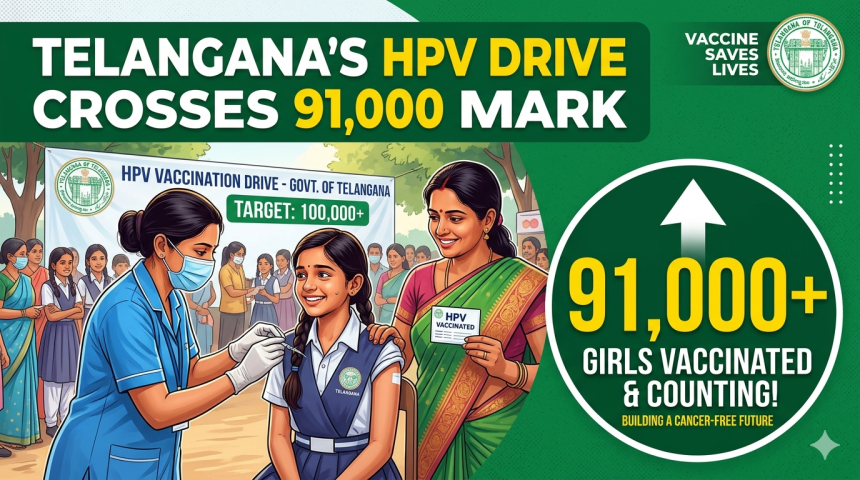
Telangana’s free HPV vaccination drive is gathering pace, with the number of beneficiaries now crossing 91,000. The campaign, aimed at protecting adolescent girls from cervical cancer, is emerging as one of the state’s most important public health pushes this year.
The scale of the response shows that awareness is slowly translating into action. What began as a preventive health initiative is now turning into a major statewide effort, with thousands of families choosing vaccination as a form of long-term protection.
Why This Matters
HPV vaccination is not just another routine inoculation; it is a frontline step in preventing cervical cancer later in life. Telangana launched the drive for girls aged 14 to 15 as part of a broader public health strategy, and the current turnout suggests the message is reaching homes across the state.
Officials had targeted around 3.5 lakh to 4 lakh girls in the state-wide rollout, and the latest count indicates that the campaign is moving steadily toward that goal.
How The Rollout Works
The vaccine is being offered free of cost at government facilities, starting with major hospitals and later extending to primary health centres. The campaign has been run in mission mode, with daily vaccination sessions designed to make access easier for eligible girls and their families.
That structure matters because public health drives often succeed or fail based on convenience. By bringing the vaccine closer to communities, the state is trying to remove hesitation and logistics from the equation.
Awareness Is The Real Win
One of the most encouraging signs is that parents are showing greater willingness to participate in preventive healthcare. In many households, the HPV vaccine is still a relatively new topic, so each additional beneficiary also reflects a broader shift in awareness.
That change is important because cervical cancer prevention works best when vaccination happens early. The more families understand that, the stronger the long-term health impact of the drive will be.
With the drive still underway, the focus will now be on sustaining momentum and reaching the remaining eligible beneficiaries. Health officials are likely to continue outreach efforts so that more girls can receive the vaccine through government facilities.
The 91,000 mark is a strong milestone, but the bigger story is what it represents: a statewide push that could save lives years from now. In public health, that is the kind of progress that matters most.