


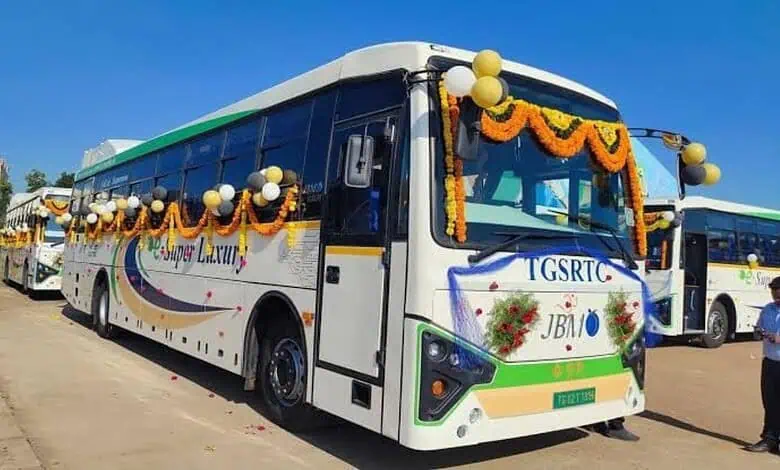
The Telangana State Road Transport Corporation (TGSRTC) has hit the brakes on its electric revolution, grounding 500 JBM-made e-buses after a series of alarming fire incidents shook commuters’ confidence and raised serious safety concerns.
Telangana’s e-bus fleet under cloud
In a dramatic move, TGSRTC has temporarily suspended operations of hundreds of electric buses, all manufactured by JBM, amid repeated reports of smoke and fire from high-voltage battery compartments. The buses, once showcased as the future of clean, comfortable public transport, now sit idle in depots as officials scramble to reassure a worried public.
Transport authorities say the decision was taken with passenger safety as the top priority, even if it means short-term disruption to services on key routes across the state.
Flames on the highway, panic in the bus
The turning point came after a recent incident in which an e-bus caught fire during a trip, forcing the driver to make an emergency stop and evacuate dozens of passengers within minutes. Eyewitness accounts describe panic inside the bus as smoke emerged near the battery section, followed by flames that quickly engulfed the vehicle.
Thankfully, all passengers escaped unharmed — but the visuals of a burning “green” bus have gone viral, fuelling anger and anxiety among regular commuters.
Big promises, bigger questions
Electric buses were rolled out with much fanfare: quieter rides, lower emissions, and a modern image for public transport. Now, those promises are overshadowed by questions:
- Are battery safety standards and fire protection systems strong enough?
- Are drivers and depot staff trained to handle high-voltage emergencies?
- Were early warning signs ignored in the rush to go green?
The grounding of 500 buses suggests that authorities are no longer willing to take chances while those questions remain unanswered.
Manufacturer in the hot seat
The spotlight now turns to the bus manufacturer, JBM, which is expected to conduct detailed inspections, submit technical reports, and certify which vehicles are truly safe to return to service.
Only after thorough checks, replacements or upgrades to faulty components, and clear written assurances, will the e-buses be allowed back on the road. Until then, JBM’s electric fleet in Telangana is essentially under a safety quarantine.
Commuters brace for disruption
With hundreds of e-buses off the road, daily travellers are already feeling the pinch. Routes that relied heavily on electric coaches may see:
- Fewer buses and longer waiting times.
- Substitution with older diesel buses.
- Last-minute schedule changes and crowding in peak hours.
For office-goers, students and intercity passengers, the very buses once marketed as “premium, eco-friendly travel” have turned into a symbol of uncertainty.
Jolt to India’s EV ambitions
Beyond Telangana, this episode sends a wider message across India’s rapidly growing electric vehicle landscape. The race to adopt clean mobility cannot come at the cost of basic safety, especially in mass transport where a single failure puts dozens of lives at risk.
Experts have long warned that:
- Battery design and thermal management must be rigorously tested for Indian conditions.
- Independent safety audits and surprise inspections should be the norm.
- Clear accountability must exist when repeated incidents occur.
The TGSRTC move may now force a reset in how aggressively — and how carefully — electric buses are deployed across the country.
Eyes on the next move
All eyes are now on what happens next: Will the investigation lead to a full redesign of certain e-bus systems? Will stricter national guidelines follow? And most importantly, when these buses finally return to service, will passengers trust them again?
For now, Telangana’s electric bus dream is on pause, parked in depots under a cloud of doubt. Whether it restarts stronger — or slower — may decide how India’s public transport embraces the electric future.