


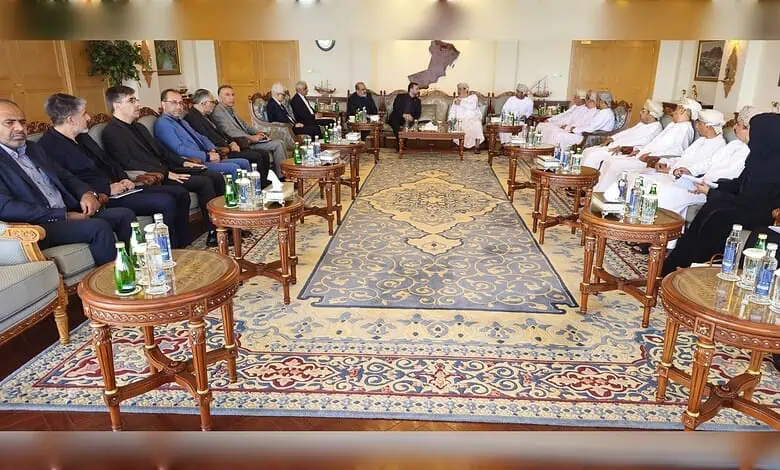
Iran and Oman have held the first meeting of their Joint Hormuz Committee in Muscat, giving fresh momentum to discussions over the future management of the Strait of Hormuz, one of the world’s most strategically sensitive shipping routes. The move comes at a time when regional tensions remain high and every diplomatic signal is being watched closely.
The inaugural meeting was attended by Iran’s Deputy Foreign Minister for Legal and International Affairs, Kazem Gharibabadi, and Oman’s Minister of State for Foreign Affairs, Abdulaziz Al-Hinai. According to Gharibabadi, the two sides reviewed developments related to the strait and exchanged views on its future administration under the relevant memorandum framework, while also reaffirming the sovereign rights of coastal states.
Why the meeting matters
The Strait of Hormuz is not just another maritime passage; it is a global chokepoint through which a significant share of international energy shipments passes. That is why even a technical committee meeting can carry geopolitical weight, especially when it involves states directly connected to the waterway.
For Iran and Oman, the talks also signal a preference for dialogue over confrontation. Oman has long played the role of a careful regional mediator, and this latest meeting reinforces its position as a bridge between competing interests in the Gulf.
The diplomatic backdrop
The committee session follows broader efforts to preserve a fragile regional ceasefire and keep maritime tensions from escalating further. Reports indicate that the discussions are taking place alongside wider negotiations aimed at stabilizing the situation around the Strait of Hormuz.
That context makes the timing especially significant. In a region where military escalation can quickly affect shipping, trade and energy prices, even limited diplomatic progress can be read as a useful signal to markets and governments alike.
What was discussed
Iran said the meeting focused on current issues in the strait and on possible future management arrangements. The discussion was framed within the legal and sovereign rights of coastal states, suggesting that Tehran wants any framework to reflect regional ownership rather than outside pressure.
Earlier reports also indicated that Iran and Oman had agreed to establish a joint committee to continue talks on shipping management, related services and costs, with consultations involving other Gulf coastal states and relevant stakeholders.
A high-stakes waterway
The Strait of Hormuz remains one of the most watched maritime routes in the world because of its role in global oil and cargo movement. Any discussion about its administration tends to draw immediate attention, not only from neighboring states but also from shipping interests and energy markets far beyond the Gulf.
That is what gives this committee meeting its larger significance. It may have been a first session, but in the politics of the Gulf, first sessions often set the tone for what follows.
What comes next
The real test will be whether these talks move beyond formal consultation and into sustained coordination. If they do, the committee could become an important channel for reducing friction around one of the world’s most important sea lanes.
For now, the message is clear: Iran and Oman are choosing negotiation at a moment when the region can least afford another crisis. And in a place as strategically charged as Hormuz, that alone is newsworthy.