


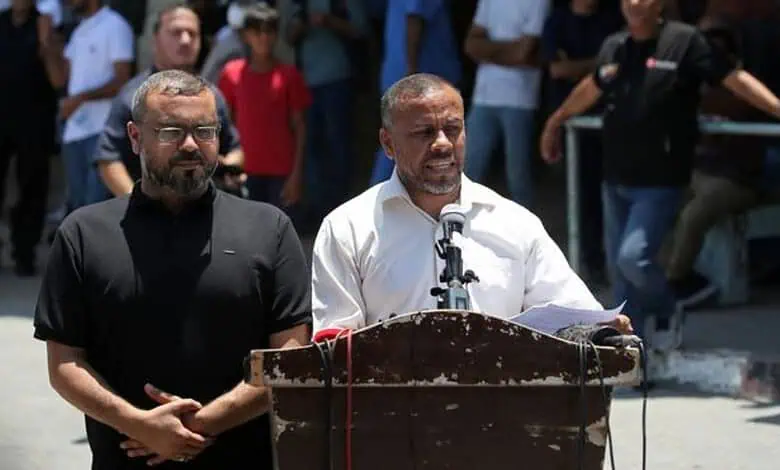
In a major shift in the Gaza conflict, Hamas announced that it has dissolved the governing body of the Gaza Strip as part of a US‑backed ceasefire framework aimed at securing an end to months of intense fighting. The move signals a possible turning point — but it also raises urgent questions about governance, security and humanitarian recovery in the territory.
What the announcement says
- Hamas has agreed to disband the administrative government that has run Gaza since 2007, framing the decision as a step toward implementing the ceasefire deal.
- The US‑backed plan reportedly includes terms for prisoner exchanges, phased cessation of hostilities, expanded humanitarian access and a reconstruction roadmap — though details remain contested and incomplete publicly.
- International mediators and regional players are expected to play major roles in implementing and policing the agreement.
Why this matters
- Governance vacuum: Dissolving Gaza’s governing body leaves a gap in civil administration at a time when millions need food, medicine, shelter and basic services. Who will manage schools, hospitals and utilities during the transition is a critical concern.
- Security and control: Without a clear, credible replacement authority and effective mechanisms to enforce the ceasefire, local security could fragment, increasing the risk of renewed clashes or lawlessness.
- Humanitarian lifeline: The deal’s promised expansion of humanitarian corridors and reconstruction funds is essential. Delay or disagreement over implementation would worsen civilian suffering and complicate aid delivery.
- Regional geopolitics: The US‑backed nature of the deal will be scrutinized across the region. Neighboring states, Israel and Palestinian factions will all weigh in; their support or opposition could determine whether the agreement holds.
Possible scenarios ahead
- Managed transition: International and regional bodies help install an interim administrative mechanism (e.g., technocratic council, UN oversight or a broad Palestinian consensus government) that restores services while reconstruction begins.
- Fragmentation and spoilers: Rival factions or militant groups reject the terms, exploiting the vacuum to assert control in parts of Gaza, potentially derailing the ceasefire.
- Slow implementation: Political wrangling and funding shortfalls delay aid and rebuilding, fueling public frustration and risking renewed instability.
What to watch next
- Who fills the administrative role in Gaza: names, mandates and who funds them.
- Concrete timelines for prisoner swaps, ceasefire verification and entry of humanitarian convoys.
- Statements and commitments from Israel, Egypt, Qatar, the UN and the US on security guarantees and reconstruction financing.
- Reactions from other Palestinian factions, particularly the Palestinian Authority and smaller armed groups in Gaza.
- Ground reports on aid distribution, restoration of utilities and the safety of civilians.
Why readers should care
This is not only a diplomatic development; it is a human one. The next steps will determine whether Gaza moves toward relief and reconstruction or slides into further chaos. For policymakers, aid agencies and ordinary citizens, the stakes are immediate — from access to food and medicine to the shape of future Palestinian governance and regional stability.
Stay tuned: expect rapid updates as mediators unveil implementation details and as on-the-ground sources report how the transition unfolds. Would you like a follow-up explainer on who the likely interim administrators could be and what reconstruction financing might look like?