


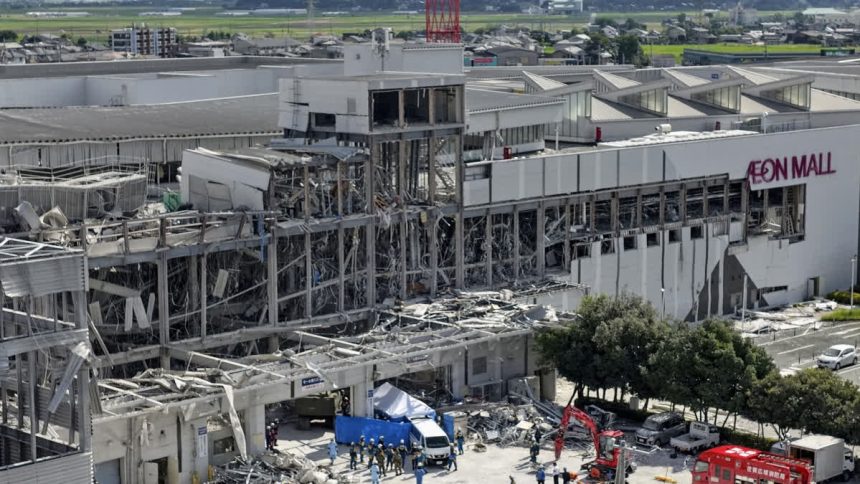
At least 28 people have died and dozens more are injured after a powerful 7.1-magnitude earthquake struck southwestern Japan’s Kumamoto Prefecture on Tuesday, with rescuers still searching for survivors in the rubble of a collapsed shopping mall and a damaged factory.
Rising death toll and missing persons
By Thursday, Japan’s Chief Cabinet Secretary Minoru Kihara said the official death toll stood at 28, including cases still under investigation to confirm whether they were directly caused by the quake. Local authorities reported at least 63 injured, with several in serious condition. The number of people still missing remained unclear as teams combed through debris in multiple locations.
The worst-hit sites include:
- Aeon Mall in Kashima Town, where a suspected gas explosion gutted the building about 50 minutes after the initial tremor. At least six people were confirmed dead at the mall, with 11 pulled from the wreckage and more still unaccounted for.
- Nippon Paper Industries factory in Yatsushiro, where a chimney collapse and structural damage killed at least eight workers, with one still missing and 10 rescued.
Widespread damage and disrupted services
The quake flattened homes, ruptured roads, triggered fires and damaged bridges across Kumamoto and surrounding areas on Kyushu island. As of Thursday morning:
- Around 22,670 households and facilities were still without power
- About 84,000 homes faced water disruptions
- Rail services and highways remained partially affected, hampering relief efforts
Residents queued for petrol and drinking water as crews worked to restore utilities in sweltering summer heat, with temperatures forecast to reach 35°C and heatstroke warnings issued.
Rescue operations and aftershocks
Hundreds of rescue workers, including firefighters, police and self-defence force personnel, continued searching through twisted steel and collapsed concrete at the mall and factory sites. Officials warned that time was running out to find survivors, especially in the heavily damaged mall where bodies were still being recovered.
A string of aftershocks has shaken the region since the main quake, further unsettling residents already coping with power cuts, water shortages and damaged homes. The Japan Meteorological Agency initially issued a tsunami advisory for parts of the Ariake and Yatsushiro seas, but it was lifted later on Tuesday as no significant waves materialized.
Government response and historical context
Prime Minister Sanae Takaichi visited the affected areas and urged people to remain vigilant for the possibility of another strong tremor. The government has deployed additional emergency teams and resources to support evacuation centres, medical care and infrastructure repair.
Kumamoto is no stranger to major quakes. In 2016, a series of powerful earthquakes killed 273 people and injured thousands across the prefecture. Japan, sitting on the Pacific “Ring of Fire,” experiences hundreds of tremors each year and accounts for about 18% of the world’s earthquakes.
As of Thursday, the focus remained on locating any remaining survivors, caring for the injured, and beginning the long process of recovery in communities still reeling from the disaster.