


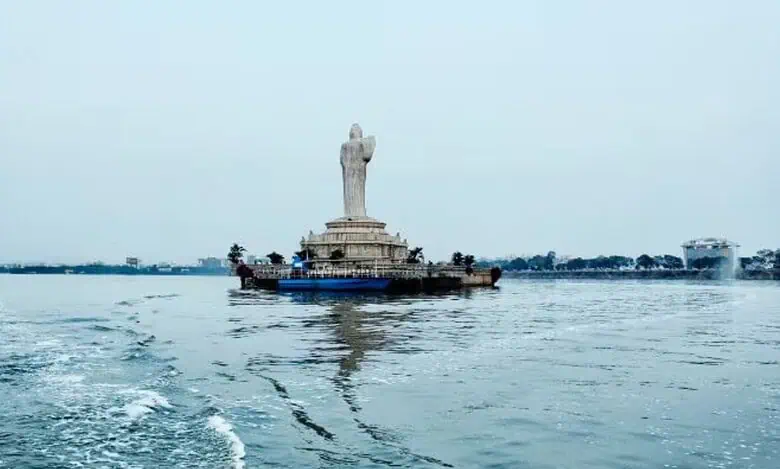
A new construction in the Full Tank Level (FTL) area of Hyderabad’s iconic Hussain Sagar lake is under the scanner, reigniting concerns over encroachments and violations around one of the city’s most sensitive water bodies. The issue has once again put a spotlight on how development around the lake is being monitored and whether environmental safeguards are being enforced.
Why the matter matters
Hussain Sagar has long been treated as a crucial urban lake, and any construction inside its FTL zone immediately raises legal and environmental questions. The FTL boundary is meant to protect the lake’s storage capacity and prevent damage to its natural ecosystem.
When structures come up in such protected zones, they often trigger public outrage, official inspections and possible legal action. For Hyderabad residents, the concern is simple: any loss of lake space can worsen flooding risks and further strain the city’s already fragile water system.
Encroachment concerns return
The latest scrutiny adds to a long-running debate over illegal and questionable constructions near the lake. Activists and civic observers have repeatedly warned that building activity in and around Hussain Sagar undermines both ecological balance and public trust.
Such cases also tend to draw attention because they often involve powerful interests, delayed enforcement and shifting official responses. That combination makes the story politically sensitive as well as environmentally important.
Questions over enforcement
The big question now is whether authorities will act firmly or allow the matter to drag on. In Hyderabad, lake protection has often been discussed loudly but enforced unevenly, which keeps feeding public skepticism.
If the construction is found to violate rules, the response will set an important precedent. If not, the controversy may deepen, especially among those who believe Hussain Sagar has already been under too much pressure for too long.
Bigger urban issue
This is not just about one structure. It reflects a wider urban problem in Hyderabad, where rapid development often collides with environmental protection.
For a city that depends on lakes for ecological balance, drainage and identity, every such case becomes more than a local dispute. It becomes a test of how seriously the city protects its natural assets while chasing growth.