


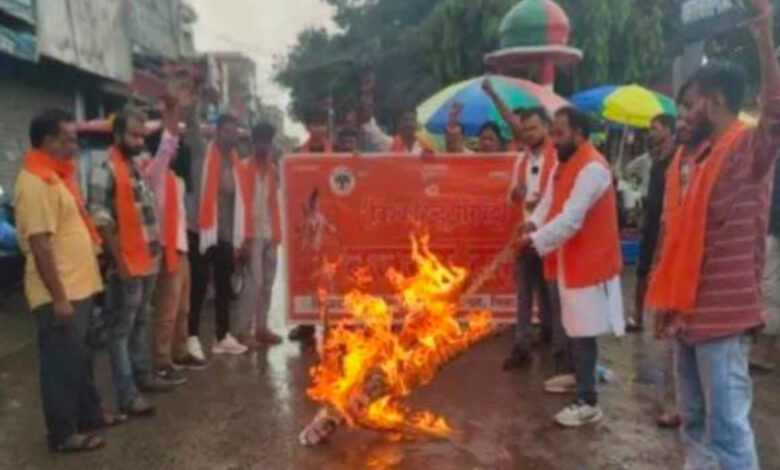
A protest linked to Aamir Khan’s reported marriage to Gauri Spratt has triggered fresh controversy after Bajrang Dal members allegedly burned the actor’s effigy. The incident has quickly turned a personal matter into a public flashpoint, drawing attention from political and cultural circles.
Protest over marriage report
The demonstration appears to have been sparked by outrage over the reported marriage, with protesters accusing the actor of actions they object to. Burning an effigy is often used as a symbolic form of protest, meant to express anger and send a public message, even when the issue itself is personal in nature.
Such protests around film personalities are not unusual in India, where celebrity news can quickly become tied to larger ideological or social debates. In this case, the reaction suggests that the reported marriage has been interpreted by some as more than a private development.
Public reaction intensifies
Aamir Khan has long been one of the most visible figures in Indian cinema, and any story involving his personal life tends to attract strong reactions. When that attention mixes with protest politics, the coverage often shifts from entertainment to wider public discourse.
The effigy-burning has also raised questions about the line between free expression and targeted intimidation. While protest groups may claim the right to voice dissent, such actions can also amplify hostility and keep a controversy alive far beyond its original context.
Celebrity and politics
Incidents like this reflect how closely celebrity culture and public sentiment are intertwined. A film star’s personal life can quickly become a public issue, especially when it intersects with identity, morality or political messaging.
For now, the episode adds another layer to the discussion around Aamir Khan’s reported marriage and the response it has generated. It also shows how quickly a private story can become a larger social and political confrontation.