

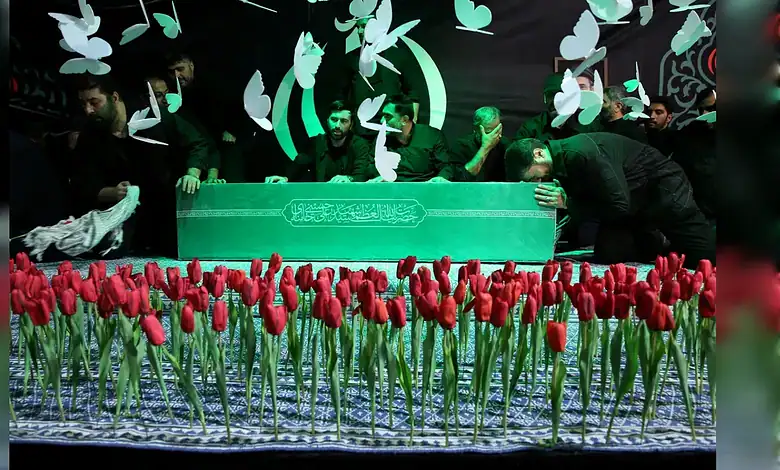
The coffin of Iran’s Supreme Leader Ayatollah Ali Khamenei has arrived in Tehran, setting the stage for an unprecedented wave of public mourning and tightly choreographed state ceremonies in the coming days. The arrival marks the beginning of a crucial and emotionally charged period for the Islamic Republic, as the country prepares to bid farewell to its most powerful figure of the past three decades.
Crowds lined routes and gathered near key locations as the coffin was transported under heavy security, with images of tearful supporters, black flags and religious banners giving a clear sense of the mood on the ground. For many Iranians, the moment is not just about personal grief, but about witnessing a major chapter in their country’s political and religious history closing in real time.
A capital draped in mourning
Tehran has been gradually transformed into a city in mourning. Giant portraits of Khamenei, Quranic verses and condolence messages have appeared on buildings, bridges and public squares, while mosques and seminaries have announced special prayers and gatherings.
Authorities have urged citizens to participate in the funeral rites in large numbers, and significant parts of public life — including schools, offices and markets — are expected to slow or pause as the main ceremonies take place. The atmosphere is a mix of solemnity, uncertainty and intense state-led symbolism.
Funeral plans and processions
The coffin’s arrival is the first phase of a carefully planned sequence of events:
- Public viewings and prayer gatherings in major religious and political venues.
- Processions through selected areas of Tehran, allowing people to pay respects from the roadside.
- High-level state funeral attended by political, military and religious leadership, along with foreign delegations where permitted.
Millions are expected to turn out over multiple days, echoing scenes from previous funerals of top Iranian leaders, but on a scale likely to be even larger given Khamenei’s long tenure and influence.
Political undertones amid grief
While the ceremonies are framed as purely religious and national mourning, they inevitably carry strong political undertones. The transition after Khamenei will shape Iran’s future direction — from domestic governance and social control to foreign policy and regional alliances.
The funeral period allows the state to project unity and continuity, even as key factions and institutions quietly navigate succession questions and power balances. Speeches delivered during the ceremonies will be closely watched for signals about the path ahead.
Impact on ordinary Iranians
For many citizens, especially those who have lived their entire lives under Khamenei’s leadership, this moment is deeply personal. Supporters see him as a steadfast guardian of the Islamic Revolution; critics see the end of an era marked by tight control and confrontation with the West.
Regardless of political stance, the logistics of mass mourning will affect everyday life: road closures, crowd control, transport diversions and heightened security checks around central Tehran and major religious sites. Residents have been advised to plan movements carefully and avoid certain areas during peak procession hours.
A historic farewell
The arrival of Khamenei’s coffin in Tehran is more than a ceremonial milestone. It is the visible beginning of one of the most significant transitions in Iran’s contemporary history. As the capital braces for days of mourning, the world will be watching not only the sheer scale of public emotion, but also the subtle signals about what — and who — comes next.