


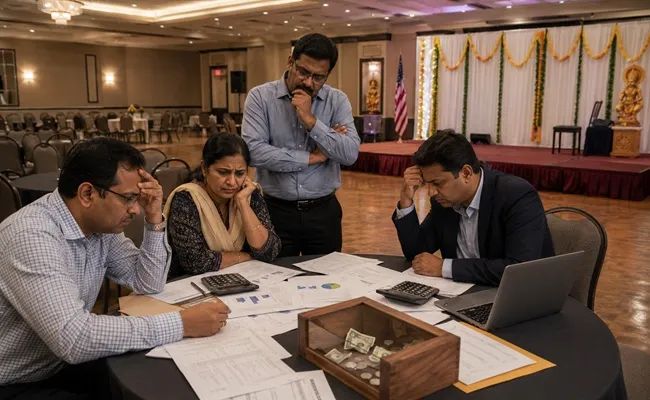
Telugu associations in the United States are facing one of their toughest financial phases in years. Once known for grand conventions, celebrity-packed stages and large-scale cultural celebrations, many of these groups are now struggling to raise enough money even for basic event costs.
What changed
The biggest blow came from the tightening and withdrawal of corporate matching-grant support. In the past, many associations depended heavily on those programs to inflate donations and fund big conventions. That model has now weakened sharply.
At the same time, donors are becoming more cautious. Many Telugu employees in American companies fear scrutiny, so they are avoiding aggressive giving campaigns. Private donations have also slowed because of inflation, layoffs and general economic uncertainty.
Conventions under pressure
Several associations that once spent millions on their biennial conventions are now cutting back hard. One group reportedly had nearly $4 million available for its 2022 event. This time, it has raised less than $1 million.
That gap is forcing organisers to scale down. Instead of lavish productions, many are now trying to cover only the essentials. For associations built on prestige and community showmanship, the sudden squeeze is a major setback.
Trust crisis deepens
The money problem is not only about reduced donations. It is also about trust. One well-known Telugu association has already shut down after being dragged into a matching-grants fraud controversy.
Another long-running organisation is facing allegations of financial irregularities and internal conflict. These disputes have made donors more hesitant and have damaged the image of the broader Telugu association network in the US.
Why donors are pulling back
A major reason for the slowdown is fear. Many employees do not want their company donations linked to organisations that may face compliance questions. Some worry that even legitimate contributions could draw unwanted attention.
As a result, the old formula is no longer working. Associations that once relied on easy fundraising now have to convince members with transparency, accountability and clear spending plans.
Bigger challenge ahead
The crisis has exposed a deeper issue: many Telugu associations grew fast, but their fundraising systems did not evolve with the same discipline. When corporate support was strong, the model looked sustainable. Without it, the weaknesses are showing.
If these organisations want to survive and thrive, they will need to rebuild trust first. They will also have to rethink how they raise funds, how they report accounts and how they manage large community events in the future.