


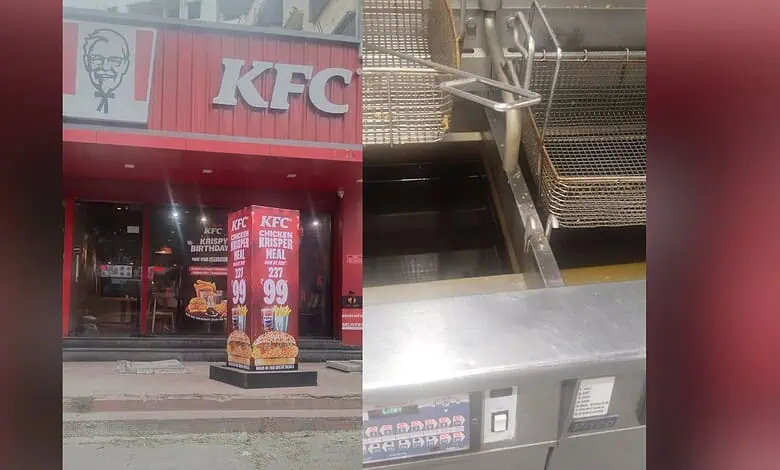
A food safety inspection at a Hyderabad KFC outlet has uncovered a troubling mix of violations, including unsafe cooking oil and a pungent smell inside the kitchen. The findings have put the fast-food chain under the spotlight and raised fresh questions about hygiene standards at one of the city’s most popular quick-service brands.
What makes the inspection especially alarming is that it reportedly found oil used far beyond safe limits, along with signs of poor kitchen sanitation. For customers, that turns a routine fried meal into a bigger question: what exactly is happening behind the counter?
What Inspectors Found
The inspection reportedly flagged dark, overused cooking oil with safety levels beyond the permitted limit. Officials also noticed a strong smell in the kitchen area, suggesting that waste and cleanliness issues may have been building up over time.
In a place that serves thousands of meals, even small lapses can matter. Cooking oil that has been reused too many times can affect taste, quality and, more importantly, health.
Why The Oil Matters
Used cooking oil is not just a food quality issue; it is a safety issue. When oil is overheated and reused repeatedly, it can break down and form harmful compounds that are not meant to be consumed regularly.
That is why the inspection has drawn so much attention. A fast-food chain is expected to follow strict hygiene standards, and when an outlet falls short, people naturally start questioning how common such lapses may be elsewhere.
Why This Story Is Getting Attention
KFC is a familiar name to most diners, which makes any safety scare instantly newsworthy. Readers pay attention when a global food brand is linked to kitchen violations because it feels close to everyday life.
That familiarity is exactly what gives the story its punch. It is not an abstract regulatory case — it is about the food people order on busy evenings, on breaks from work and during family outings.
What Happens Next
The outlet is likely to face further action depending on the findings and follow-up inspection. If the violations are confirmed, the case could lead to stricter monitoring and possible penalties.
For now, the incident serves as a reminder that behind a glossy brand name, food safety still depends on daily discipline. And when that discipline slips, the smell in the kitchen can become a much bigger story.