

President Donald Trump announced that oil tankers are once again moving through the strategically vital Strait of Hormuz, declaring that the United States now controls the critical maritime passage — not Iran — in a dramatic update hours after announcing a breakthrough agreement with Tehran.
In his latest post on Truth Social, Trump said ships, many loaded up with oil, are already moving through the strait. “They’re going along the southern highway, which is totally safe, secure, and pristine,” he wrote.
The Secret Military Mission Behind the Breakthrough
Trump’s comments come after he revealed that the U.S. military has covertly assisted 200 commercial vessels and facilitated the passage of over 100 million barrels of oil through the Strait of Hormuz.
On Wednesday, Trump announced in the Oval Office that the United States has been secretly ferrying “millions of barrels” of oil through the strait. “Last month, I directed our Great U.S. Military to execute a secret mission to support Oil Tankers and other Commercial Ships through the Strait of Hormuz,” Trump wrote on his social media platform.
“Today, I am pleased to announce that this effort has resulted in more than 100 MILLION Barrels of Oil making its way through the Strait, and into the Open Market. More than 200 Commercial Ships have safely traveled through the Strait,” he added.
“UNITED STATES Controls the Strait of Hormuz — NOT Iran”
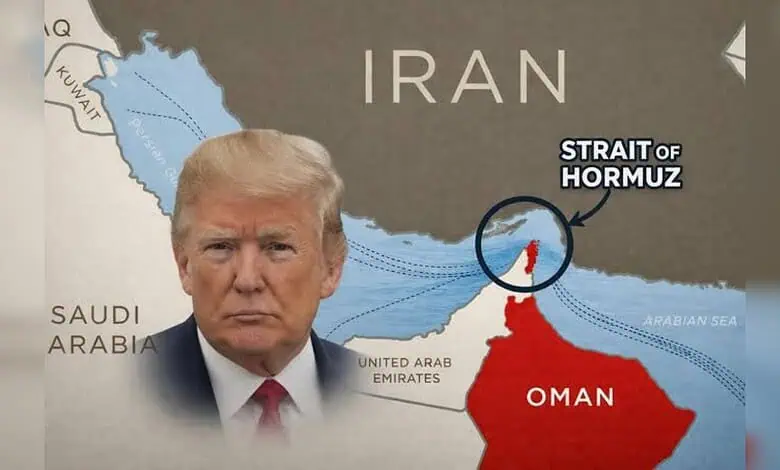
Trump’s assertion marks a dramatic shift in the geopolitical narrative surrounding the critical waterway. The Strait of Hormuz, located between Iran and Oman, is one of the world’s most important oil shipping routes, facilitating the transit of approximately 20% of the globe’s oil supply.
“This extraordinarily successful initiative is due to the UNITED STATES of AMERICA CONTROLLING the Strait of Hormuz — NOT Iran,” Trump declared in his Truth Social post.
The president’s comments come after Energy Secretary Chris Wright said Tuesday that oil exports through Hormuz are “rising very meaningfully.”
Why This Matters: Global Energy Crisis Averted
The Strait of Hormuz has been a flashpoint for international tensions, with shipping companies refraining from sending oil and gas tankers through the strait due to fears of potential attacks amid the ongoing conflict with Iran.
Before Trump’s secret mission, tanker movement through the Strait of Hormuz had nearly ceased. JPMorgan analysts estimated in a June 4 report that around 2 million barrels per day might be leaving on tankers that have turned off their transponders to avoid detection.
“Despite the persistent naval blockade and a significant drop in commercial activity, unexpected quantities of crude and petroleum products still seem to be moving through the Strait,” the JPMorgan analysts noted.
Trump’s Earlier Iran Standoffs Over Hormuz
This announcement follows a series of tense exchanges between Trump and Iran over the strait. In March 2026, Trump said Iran let 10 oil ships through the Strait of Hormuz as a “present” to the U.S., describing it as a gesture to demonstrate that Tehran was “genuine and reliable.”
In April 2026, Trump issued a stern warning to Iran, stating they “better stop now” if they’re charging fees to oil tankers passing through the strait. “There reports that is charging to tank going through the Hormuz Strait,” he remarked. “They not be, if are, better stop now!”
Trump had also previously indicated that the United States would mobilize its Navy to accompany commercial vessels through the strait if necessary, saying “the United States Navy will begin escorting tankers through the Strait of Hormuz, as soon as possible.”
What Happens Next: Oil Prices and Global Markets
Trump’s announcement has significant implications for global energy markets. Following similar announcements in March 2026, oil prices initially dipped but quickly rebounded, while stock values also saw an uptick.
The breakthrough could help prevent a potential energy crisis caused by the war with Iran, which Trump had previously warned could disrupt global oil supplies.
Energy analysts are now watching closely to see if the increased oil flow through Hormuz will be sustained and whether the agreement with Iran will lead to a broader resolution of tensions in the region.