


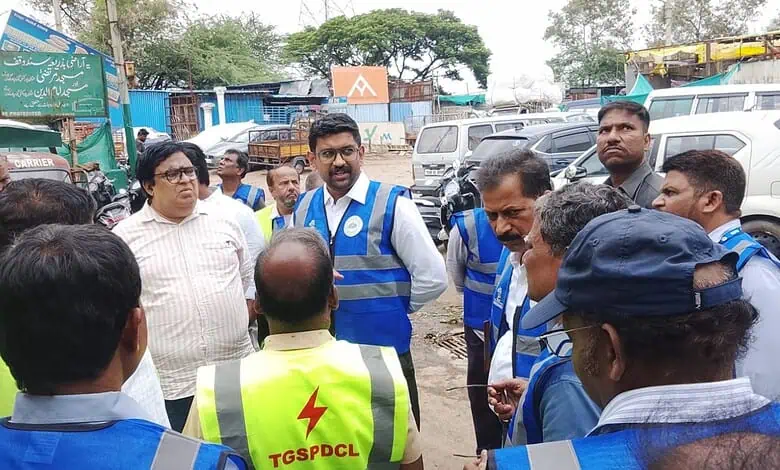
The Telangana State Southern Power Distribution Company Limited (TGSPDCL) has launched a comprehensive crackdown on power outages, stepping up inspections with tree trimming, GPS technology, and round-the-clock vigilance to ensure uninterrupted electricity supply as the monsoon season approaches.
With tree branches identified as the leading cause of power disruptions during the rainy season, TGSPDCL Chairman and Managing Director Musharraf Faruqui has directed all field personnel to prioritize trimming overgrown branches in tree-dense areas across the region.
The Tree Branch Problem: Why Power Cuts Are Inevitable During Monsoon
According to feeder disruption data, contact with tree branches is the biggest reason for tripping during monsoon. When rain and wind combine, overgrown branches can easily touch power lines, causing immediate tripping and leaving thousands of customers without electricity.
“Feeder disruption data clearly shows that contact with tree branches is the biggest reason for tripping. This must be addressed ahead of time through proactive patrols and maintenance,” Faruqui said during a video link conference with chief engineers and superintending engineers.
The situation becomes worse during heavy rainfall when wet tree branches become more conductive and cause electrical faults, strong winds push branches into power lines, waterlogged areas increase the risk of equipment failure, and debris from trees can damage transformers and other infrastructure.
Round-the-Clock Vigil: Field Staff on High Alert
As part of the emergency preparedness measures, officials have been instructed to stay on high alert during rainfall and weather warnings. All field staff must remain on standby at their respective stations, ready to respond to power complaints at short notice.
The emergency response protocol includes immediate deployment of repair teams within 15 minutes of complaint, 24-hour monitoring of critical power feeders and transformers, fast complaint response with GPS-tracked vehicles for real-time tracking, and continuous coordination between field personnel and control rooms.
GPS Technology: Real-Time Tracking for Faster Repairs
To ensure quicker response times, TGSPDCL has installed GPS technology in vehicles under the Field Operation Centres (FOCs), allowing real-time tracking and faster deployment of teams to complaint locations.
The GPS system enables live tracking of repair vehicles across the network, optimal routing to reach complaint locations fastest, performance monitoring of field staff response times, and resource allocation based on real-time demand patterns.
This technology has significantly reduced the time taken to reach customers during outages, with response times improving from 45 minutes to just 15 minutes in many areas.
Continuous Monitoring of Critical Infrastructure
Faruqui emphasized continuous monitoring of critical power feeders and Distribution Transformers (DTRs), especially in areas that are prone to frequent outages.
“There should be no compromise on service reliability during the monsoon,” the CMD asserted.
Superintending Engineers have been tasked with conducting weekly reviews with their field teams and identifying recurring issues in their regions. Comprehensive checks of feeders, transformers, and AB switches are to be conducted to prevent avoidable outages.
Critical infrastructure under monitoring includes 33 KV feeders serving 1,500-3,000 customers each, 11 KV feeders serving 250-500 customers, Distribution Transformers (DTRs) serving residential areas, AB switches at transformer junctions, and Horn Gap Fuses protecting equipment from surges.
Asset Survey Expansion: Mapping the Entire Network
Building on the earlier TG AIMS (Asset Information Management System) survey of the 11 kV network, which involved mapping electric poles, transformers, and related equipment, Faruqui announced the expansion of the initiative to cover the 33 kV and Low Tension (LT) networks.
This is expected to improve infrastructure visibility and fault response time during the monsoon. The expanded survey will include complete mapping of all 33 kV poles and transformers, low tension network documentation for residential areas, digital inventory of all equipment across the network, and GIS integration for real-time location tracking.
The comprehensive asset database will help engineers quickly identify faulty equipment and dispatch repair teams with precise location information.
Feeder Outage Management System (FOMS): High-Tech Outage Control
TGSPDCL has begun implementing the Feeder Outage Management System (FOMS) technology across its 11 KV feeders to swiftly identify and resolve power supply issues, announced CMD Musharraf Faruqui.
The FOMS system can automatically detect damaged or faulty sections in a feeder. The information, mapped through the Geographic Information System (GIS), is immediately sent to the concerned Assistant Engineer via the SASA app, accompanied by a buzzer alert.
This allows repair teams to quickly locate and fix power disruptions, ensuring minimal downtime. Additionally, the duration of power outages can now be monitored in real time, with updates reaching the highest levels of management, including the CMD.
FOMS implementation progress covers 8,621 feeders total across TGSPDCL’s network, with 3,412 feeders in GHMC areas upgraded, 5,209 feeders in rural regions covered, and 4,433 feeders upgraded so far. The company plans to bring 2,000 more feeders under FOMS by end of March, with remaining feeders to be covered by April.
Previous Success: 43.5% Reduction in Outages
Officials have reported significant progress in reducing power outages. Over the past five months, outages in the 33 KV lines have been reduced by 43.5 percent.
The average monthly outage time for a 33 KV feeder is now 26.7 minutes, down from 47.3 minutes previously recorded within the SPDCL limits. By addressing issues proactively, TGSPDCL aims to enhance the reliability of power supply and minimize disruptions for consumers.
Communication Initiative: One-Day Notice for Power Cuts
TGSPDCL MD Musharraf Farooqui has also asked staff to give a day’s notice to people for maintenance work. Consumers must be notified in advance about power supply line clearances (interruptions) for network maintenance and repairs.
The lack of such communication has been causing inconvenience to consumers. Officials have been asked to disseminate maintenance information through press releases in local media, SMS notifications to consumers’ mobile phones, auto or bike-mounted staff using loudspeakers in slums and colonies, and WhatsApp groups with members of gated communities, residential welfare associations, and apartment associations.
What Consumers Should Do During Power Outages
TGSPDCL has advised consumers to follow these safety measures during power outages: unplug large appliances such as refrigerators, ovens, air conditioners to prevent power surge damage, wait for full restoration before plugging in major appliances, report complaints through the official app or helpline number, keep emergency lights ready for extended outages, and avoid using candles during power cuts to prevent fire hazards.