


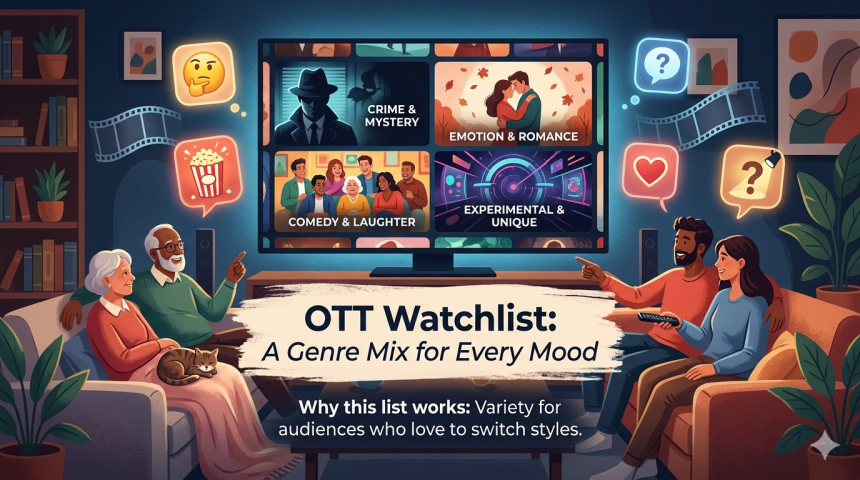
OTT platforms have made one thing clear — there is no single kind of viewer anymore. Some want crime and intensity, some want emotion, some want laughter, and others just want a film that feels different from the usual weekend watch.
That is exactly why a mixed OTT watchlist works so well. It gives viewers choices across genres and backgrounds, making it easier to find something that matches their mood instead of forcing one style on everyone.
Why this kind of watchlist works
A good OTT list is not just about new releases. It is about variety, because audiences today like to switch between styles depending on the day.
That is why films from different languages and tones often end up sharing the same conversation. One viewer may want a serious drama, another may want a family entertainer, and someone else may be looking for a sharper, more experimental story.
Different moods, different picks
A strong watchlist usually balances heavy and light content. Serious drama fans are drawn to stories that explore relationships, conflict and emotional depth, while family viewers often prefer films that are easier to watch together.
Then there are the crowd-pleasers — films with enough entertainment value to keep things moving without demanding too much from the viewer. That mix is what makes OTT such a useful space for modern audiences.
Why readers engage with it
People love recommendations that feel personal but not restrictive. A good OTT watchlist works like a quick guide: it helps readers decide what to watch without making the choice feel overwhelming.
It also performs well because streaming content changes constantly. Readers want something current, simple and easy to act on, which makes genre-based OTT roundups a natural fit for news websites.
The real appeal
What keeps an OTT watchlist interesting is the promise of something for everyone. Not every film has to be the same kind of hit — some are meant to be thoughtful, some fun, some emotional and some just comfortably entertaining.
That is what makes the format work so well. It reflects how people actually watch content now: in different moods, across different genres, and often without a fixed plan.