


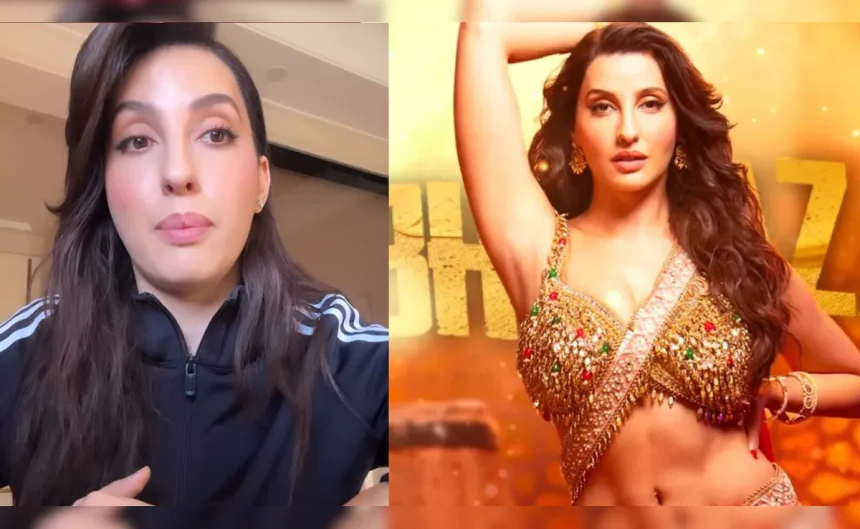
Bollywood dancer Nora Fatehi has hit back at the makers of the Kannada film KD: The Devil, accusing them of “misleading” her about the nature of the song Sarke Chunar Teri Sarke and of using artificial intelligence‑generated visuals without her consent. The controversy has snowballed after the track, which features Nora alongside veteran actor Sanjay Dutt, faced massive backlash for its allegedly vulgar lyrics and suggestive choreography, prompting its removal from digital platforms.
“No approval, no permission”
In a series of social‑media statements, Fatehi said she was not properly informed about the Hindi version’s content and that the explicit lyrics shocked her only after the song went public, She claimed that no prior approval was taken for the final cut, and accused the production team of using “unflattering” photos of her, including a viral still with Sanjay Dutt that insists that is an AI‑generated image and not a real frame from the shoot.
From virality to removal
What began as a high‑energy dance number quickly turned into a social‑media firestorm. Clips of the song circulated widely on X, Instagram, and YouTube, with many users calling the lyrics “disgusting” and the camera work “exploitative,” while others defended it as stylised commercial entertainment. Facing mounting criticism and even legal complaints, the makers of KD: The Devil pulled Sarke Chunar Teri Sarke from streaming platforms in what industry insiders describe as a damage‑control move.
Nora’s nuanced defence
Fatehi, however, has framed the uproar differently. In an Instagram clip, she said she initially assumed the song was a remake of an “iconic” track and trusted the filmmakers to translate the sequence appropriately. She also thanked the public for the backlash, saying the outrage ultimately forced the team to take corrective action, but stressed that performers should not automatically bear the brunt of poorly written lyrics or misused visuals.
A larger debate on lyrics and bodies
The row has spilled beyond one song into a broader conversation about the treatment of women in item numbers, the role of lyricists, and the ethics of using AI‑assisted images in publicity. Commentators have pointed out that while Nora’s fans largely blame the writers and directors, the debate is also forcing a rethink on how streaming platforms, certifiers, and studios handle songs that push the line of explicit content. For now, Sarke Chunar Teri Sarke exists mostly in clips and memes, but its brief life on screens has left a lasting question: who, in an age of AI and algorithm‑driven outrage, gets to decide what is “too vulgar” and what is “just entertainment”?