


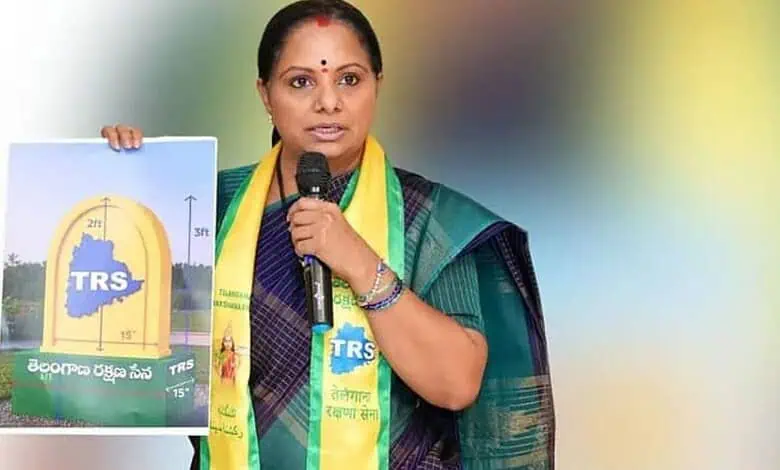
K. Kavitha has questioned why the TRS name was allotted to the party if it had already been given earlier, triggering a fresh round of political debate in Telangana. Her remarks appear to reopen an old dispute over the party’s identity, legacy and the circumstances under which the name was secured.
Kavitha raises a new question
The comment from Kavitha has drawn attention because it touches on a sensitive issue in Telangana politics: who had rightful claim over the TRS name and how that claim was established. By framing the issue as a question of allocation, she has revived interest in the legal and political history behind the party’s branding.
Such remarks are likely to be seen as more than just a technical query. In a state where party symbols, names and political legacies carry strong emotional and electoral value, even a small statement can quickly become part of a larger narrative.
Political significance
The TRS name has long been associated with the Telangana statehood movement and the party’s rise in state politics. Any suggestion that its allotment process was inconsistent or unclear could be used by rivals to challenge the party’s historical claims.
Kavitha’s statement may also reflect internal political messaging, depending on the context in which she made it. In Telangana, party identity often overlaps with family, movement history and governance records, making such questions politically loaded.
What it means now
For the moment, the remarks are likely to fuel discussion rather than produce immediate action. But they could prompt fresh scrutiny of old records, party documents and the timeline of how the name TRS was used and formalised.
In practical terms, the issue may not change the current political landscape right away. Still, it adds another layer to the continuing debate around Telangana’s political origins and the role played by the party that dominated them.