


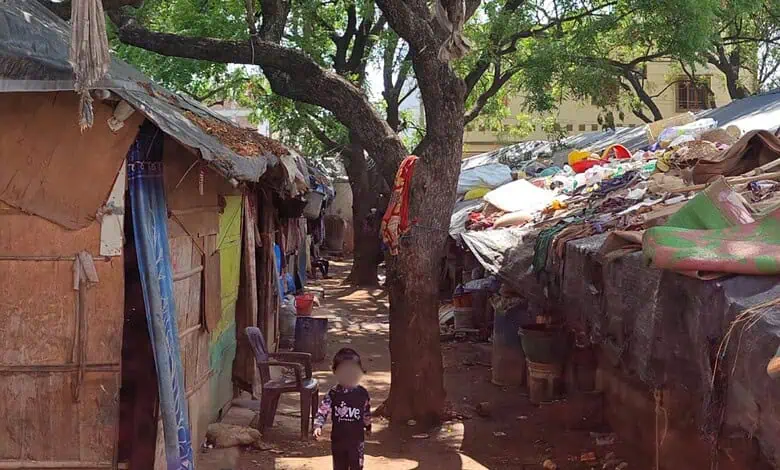
For many Rohingya families in Hyderabad, life is defined not by where they live, but by what they still do not have. They fled violence in Myanmar with the hope of safety, only to find themselves trapped in a long, uncertain limbo in India, where survival is possible but belonging remains out of reach.
Their story is one of fear, resilience and unanswered questions. In the city’s southern outskirts, many live in small rented huts and makeshift shelters, working daily-wage jobs, rag-picking, construction labour and other informal work just to get through the week.
Life On The Margins
In Hyderabad, Rohingya families are scattered across areas such as Balapur, Shaheen Nagar, Jalpally, Asad Baba Nagar and Pahadi Shareef. Many survive on irregular wages, with some earning only when work is available, while others depend on precarious self-employment or the kindness of local communities.
Even basic living conditions remain difficult. Reports have described cramped shelters, limited sanitation and water shortages, with families paying rent for temporary spaces that still offer little security.
Statues Of Paper, Not Security
The Rohingyas’ refugee cards may offer some recognition, but they do not solve the deeper problem of statelessness. They are not treated as full citizens anywhere, and that leaves them with limited access to the rights most people take for granted, including stable housing, banking, government services and long-term certainty.
That legal gap is what makes their situation so fragile. They may be safe from the violence they fled, but they are still living with uncertainty about work, documentation and what the future holds.
Why Hyderabad Matters
Hyderabad has become one of the key places of refuge for Rohingyas in India. The city’s Muslim-majority neighbourhoods have offered some measure of acceptance, and local support networks have helped families find shelter, work and a semblance of community.
But safety and stability are not the same thing. Even those with valid documents continue to worry about deportation, legal limbo and the possibility of being pushed back into danger.
A Future Still Unwritten
What makes the Rohingya story so powerful is that it is still unfinished. These are families who survived genocide, crossed borders and rebuilt lives from almost nothing, only to find themselves stuck in a system that does not fully recognize them.
In Hyderabad, their presence is a reminder that refugee life is not only about escape; it is also about waiting. Waiting for papers, waiting for work, waiting for stability and, above all, waiting for the world to decide what stateless people are allowed to call home.