

Somewhere in Hollywood right now, very expensive people in very expensive suits are staring at a very uncomfortable number.
$179 million.
Not the budget. The collection. From a film that cost less than ₹70 lakh to make. Shot in two rooms, a car, and a small shop. With no stars anyone has heard of. No VFX. No foreign locations. No top technicians. No formula. No safety net.
Just a camera, a terrifying idea, and a director named Barker who apparently never got the memo about how Hollywood is supposed to work.
The film is called Obsession. And it has just done something that decades of industry wisdom said was impossible.
It has made every big-budget blockbuster on the planet look slightly embarrassed.
The Man Who Cannot Stop Talking About It
Before we talk about the film itself, let’s talk about who noticed it first — because in India, the name that started the conversation is one that carries serious weight.
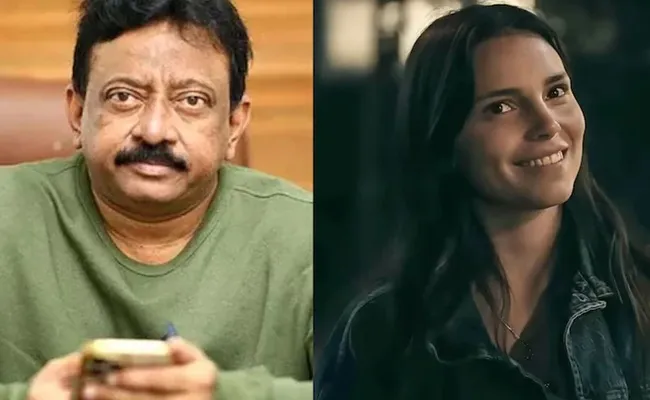
Ram Gopal Varma — the filmmaker who gave Indian cinema Satya, Rangeela, Shiva and Company — has heaped extraordinary praise on Obsession, applauding its filmmaking, editing and sound design.
RGV is not a man who flatters easily. He is not a man who minces words. And he is absolutely not a man who praises a film just to be polite.
So when he took to X and wrote — “Am OBSESSED with OBSESSION” — the Indian film industry stopped scrolling and started reading.
What followed was not a casual review. It was a masterclass. A filmmaker dissecting another filmmaker’s genius — line by line, frame by frame, cut by cut.
The Budget That Will Make Bollywood Choke on Its Coffee
Let’s get to the number that has everyone talking.
While reports suggest a budget of ₹7 crore, RGV claimed the film’s actual making cost could not have been more than ₹70 lakh, excluding technical fees.
Seventy. Lakh. Rupees.
That is less than the catering budget on most Bollywood productions. Less than the costume department on a Karan Johar film. Less than what some Telugu heroes spend on a single promotional event.
And against that ₹70 lakh — $179 million in box office collections. And counting.
If that ratio makes your head spin, it should. It means Obsession has delivered a return that would make the most aggressive Dalal Street trader weep with joy. We are talking about a film that has multiplied its investment by a factor that defies rational explanation.
Three Locations. That’s All. That Was Enough.
Here is the part that should make every filmmaker in India sit down and have a long, hard conversation with themselves.
Obsession was shot almost entirely in just three locations — two rooms in a modest house, the interior of a car, and the interior of a small store.
No Switzerland. No New York skyline. No Hyderabad cityscape used as a backdrop for a song that has nothing to do with the plot. No sprawling sets built in Film City. No 200-person crew managing a location in Europe.
Two rooms. A car. A shop.
And from those three claustrophobic, ordinary spaces — a director extracted $179 million worth of terror, tension and emotion.
The next time a Bollywood producer tells you they need ₹300 crore to tell a good story — remember this film. Remember those three locations.
The Director Who Rewrote the Rules of Horror
So who is this Barker — and what exactly did he do that has Ram Gopal Varma so obsessed?
RGV was particularly impressed by the director’s visual style and editing choices. “The director’s style is visually simplistic but very unique. I was especially struck by his use of too much head space in many shots, which strangely enhances the mood,” he wrote.
Head space — the empty air above a character’s head in a frame — is something most directors are trained to minimize. It is considered wasted screen real estate. Barker weaponises it. That emptiness above the character’s head becomes a psychological presence — the feeling that something is lurking just beyond the frame, just out of sight, just waiting.
You cannot see it. But you feel it. Every single second.
Editing as a Weapon — Not a Tool
Most people think of film editing as the invisible craft — the thing you don’t notice when it’s working perfectly. Barker uses it as a psychological assault.
RGV said Barker treats editing not merely as a technical craft but as a psychological weapon, blending rapid cuts with unusually long pauses. Citing the long hold on Nikki’s face in the interval shot, RGV said such moments create unbearable tension because the audience is trapped in the character’s perspective with no escape.
Unbearable tension. No escape.
That is not filmmaking. That is a trap. A beautifully constructed, meticulously planned psychological trap that audiences walked into voluntarily — and kept walking into, week after week, until the global collection hit $179 million.
“His cutting on sharp sound effects — a door slam, a sudden laugh, a heartbeat — to create rhythmic punctuation is awe-inspiring,” RGV wrote.
A door slam. A laugh. A heartbeat. These are not special effects. They cost nothing. And in Barker’s hands, they are more terrifying than any CGI monster ever rendered on a server farm.
The Philosophy That Changes Everything
But the most important thing RGV said about Obsession was not about a specific shot or a specific scene. It was about the philosophy behind the entire film.
“Barker’s editing philosophy seems to be: make the audience feel what the character feels, which is being unstable. He throws out traditional editing rules such as smooth continuity and clear emotional beats in favour of something extremely anarchic. The result is a film that feels unpredictable and alive, like the editing itself is also a part of the horror,” RGV wrote.
Read that last sentence one more time. The editing itself is a part of the horror.
Not the monster. Not the jump scare. Not the gore. The editing. The rhythm. The chaos deliberately stitched into the fabric of how the film moves. The discomfort is not in what you see — it is in how it is shown to you. It is in the gap between cuts. The pause that lasts one second too long. The shot that holds when every instinct in your body says cut away.
That is genius. Uncomfortable, unsettling, ₹70-lakh genius.
What This Means for Indian Cinema
RGV pointed out that Obsession has succeeded without depending on the usual commercial elements — no big stars, no grand locations, no lavish production design, no foreign shoots and no top technicians.
And yet here it sits. $179 million. Growing.
RGV said the film has challenged the long-held belief that only big-star, big-budget spectacle films can pull audiences to theatres. “OBSESSION reset that button,” he wrote.
Reset that button. Not nudged it. Not questioned it. Reset it entirely.
For Indian cinema — an industry that has spent years convincing itself that audiences only come for stars, spectacle and scale — this is not just a foreign film doing well at the box office. This is a mirror. And the reflection is uncomfortable.
Because if a film shot in two rooms and a car can earn $179 million — what exactly is the excuse for every bloated, overproduced, underwritten blockbuster that cost 200 crores and delivered nothing?
Obsession stars Michael Johnston as Bear and Inde Navarrette as Nikki. The supernatural horror film follows a man whose wish to win the affection of his longtime crush triggers a series of disturbing events. The film was released in India on May 29.
The Final Verdict — From the Man Who Knows
“More than the $179 million collection so far with a less than $1 million budget, what needs to be studied even more are the path-breaking edit and sound design techniques, not to forget character design,” RGV concluded.
Study it. Those are the words of Ram Gopal Varma — a man who has been studying cinema his entire life.
Not just watch it. Study it.
Because Obsession is not just a horror film. It is a lesson. A lesson about what cinema actually is, what it can do, and what it does not need in order to be extraordinary.
Two rooms. A car. A shop. ₹70 lakh. $179 million.
The greatest horror in Obsession is not on the screen. It is what it says about everything else playing in the multiplex next door.