

President Donald Trump has delivered one of his most scathing public rebukes of Israeli Prime Minister Benjamin Netanyahu, declaring that “there would be no Israel without me” while condemning Israel’s recent military strikes in Beirut as the region faces a potential breakthrough peace deal with Iran.
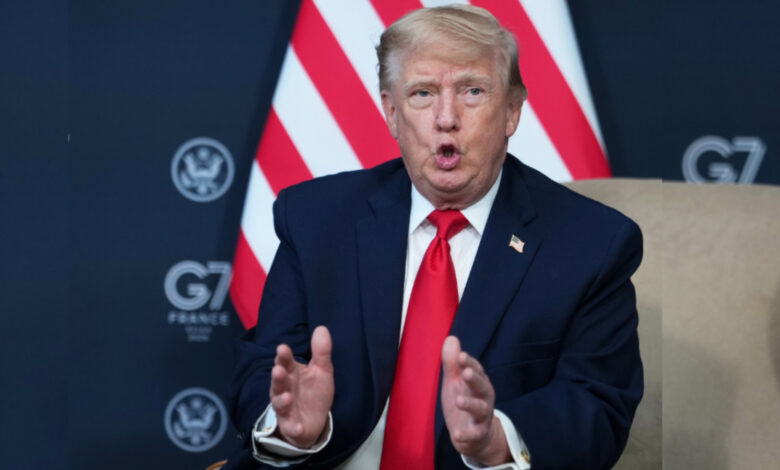
The explosive comments, made on the sidelines of the G7 summit in France, mark a dramatic shift in Trump’s relationship with Israel and represent his most pointed criticism of the Jewish state amid ongoing attacks on Lebanon.
The Beirut Strike That Sparked Trump’s Fury
Trump’s rebuke comes after Israel carried out an airstrike in Beirut’s southern suburbs on Sunday, triggering strong protests from Iran and casting doubt on the US president’s pledge that a peace deal would be signed on his 80th birthday.
“This morning’s attack on Beirut should not have happened, particularly on a special day when we are so close to a Peace Deal with Iran,” Trump wrote in a post on Truth Social.
The Israeli strike, which Trump described as responding to a “very small and meaningless” attack that didn’t hurt anyone, has complicated negotiations for a deal to end the war between the US and Iran.
“Without Me, There Would Be No Israel” — Trump’s Bold Claim
Speaking to reporters at the G7 summit, Trump made an unprecedented claim about his role in Israel’s survival.
“Without me, there would be no Israel because no other president was willing to do what I did,” Trump said. “Israel would have been blown up a long time ago.”
The president’s statement represents some of his most pointed criticism toward Israel, suggesting that his actions as president have been crucial to the country’s existence and security.
Trump elaborated that he initiated the conflict with Iran because “we cannot allow them to possess a nuclear weapon,” noting that this is “crucial for Israel, as they likely would have been the first target.”
“Bibi Has to Be More Responsible” — Trump’s Warning to Netanyahu
Despite acknowledging his “great relationship” with Netanyahu, whom he calls “Bibi,” Trump’s tone was unmistakably stern when addressing the Israeli leader’s actions in Lebanon.
“I’ve had a great relationship with Bibi, but now Bibi has to be more responsible with respect to Lebanon,” Trump said during his remarks at the G7 summit.
The president’s warning suggests that Israel’s military actions in Lebanon could jeopardize the broader peace efforts in the region and undermine US-Israel cooperation.
The Iran Peace Deal That Could Change Everything
Trump’s criticism of Israel comes at a critical moment when negotiators are reportedly “so close to a Peace Deal with Iran.” The president has emphasized that the deal could bring lasting stability to the Middle East.
“We are very close to a Deal that will bring the region, including both sides, to peace,” Trump stated. “This could be the beginning of a long and beautiful peace — Let’s not blow it!”
The potential deal would end the war between the US and Iran, which Trump said he initiated to prevent Iran from obtaining nuclear weapons — a move he claims was essential for Israel’s security.
Trump’s Complexity: Strong Israel Supporter, Now Critical
Trump’s relationship with Israel has been complex throughout his presidency. He has been one of the strongest US supporters of Israel, making historic moves including recognizing Jerusalem as Israel’s capital, moving the US embassy to Jerusalem, backing Israel’s annexation of the Golan Heights, supporting Israeli sovereignty over the West Bank, and facilitating the Abraham Accords between Israel and Arab nations.
However, Trump’s criticism of Netanyahu’s actions in Lebanon shows that even the strongest US-Israel allies can face public rebukes when military actions threaten broader strategic interests.
“Israel Has the Right to Defend Itself” — Trump’s Nuanced Position
While condemning the Beirut strike, Trump acknowledged Israel’s right to defend itself against threats. However, he argued that the attack Israel was responding to was minimal.
“Israel has the right to defend itself against threats, but the attack it was responding to was very small and meaningless,” Trump wrote, claiming nobody had been hurt, injured, or killed in the incident that triggered Israel’s response.
This nuanced position suggests Trump wants Israel to maintain security while avoiding actions that could escalate the conflict or undermine peace negotiations.
The Call for Restraint from All Sides
Trump emphasized that the ceasefire should be extended and that all parties should exercise restraint.
“There should be no more attacks by Israel anywhere in Lebanon, but there should also be no more attacks by any other party, including Hezbollah, against Israel,” Trump said.
The president’s call for restraint from all sides suggests he wants to prevent further escalation while keeping peace negotiations alive.
Iran’s Response: Vows Strong Reaction
Iranian officials have vowed a strong response to Israel’s Beirut strike, further complicating Trump’s peace efforts. The strike has raised concerns that the conflict could escalate into a broader regional war.
Trump’s warning to Israel comes as Iranian officials prepare to respond militarily, potentially jeopardizing the peace deal that Trump believes is imminent.
The G7 Summit Context: International Pressure on Israel
Trump’s comments at the G7 summit in France come amid international pressure on Israel to halt its military actions in Lebanon. Other G7 leaders have also expressed concern about the escalation, making Trump’s rebuke of Netanyahu part of a broader international consensus.
The summit provides Trump with a platform to address global leaders about the Middle East situation and potentially coordinate international pressure on Israel to restrain its military operations.
What Happens Next: Peace Deal at Risk
The future of Trump’s Iran peace deal now hangs in the balance. If Israel halts attacks, the peace deal could be finalized, potentially ending the US-Iran war and bringing stability to the region. If Israel continues strikes, Iran may launch a retaliatory attack, potentially triggering a broader regional conflict that could derail the peace negotiations.
If Trump successfully pressures Israel, Netanyahu could agree to halt military operations, preserving the peace deal but potentially facing domestic criticism in Israel. If Iran responds militarily, the conflict could escalate, making the peace deal impossible and potentially drawing the US into a wider war.
The Broader Implications: US-Israel Relations Under Trump
Trump’s criticism of Netanyahu has significant implications for US-Israel relations. Public rebukes from the US president could strain the traditionally strong relationship between Washington and Tel Aviv. Trump’s warning could affect future US military support for Israel if it continues operations in Lebanon.
Netanyahu faces domestic pressure in Israel, with some viewing Trump’s criticism as unpatriotic while others see it as necessary restraint. The peace deal that Trump believes is imminent could transform the Middle East, but Israel’s actions could jeopardize this breakthrough.
Trump’s 80th Birthday and the Peace Deal Deadline
Trump’s comments reference “a special day” — likely his 80th birthday on Sunday, when he hoped the Iran peace deal would be signed. The timing adds personal significance to the diplomatic effort.
The potential peace deal on Trump’s birthday would represent a major diplomatic achievement in his second term, potentially overshadowing other presidential accomplishments.
What This Means for the Middle East
Trump’s intervention in the Israel-Lebanon conflict could reshape the Middle East’s power balance. A successful peace deal with Iran would end the US-Iran war, reduce regional tensions, potentially improve Iran-Israel relations, strengthen US influence in the region, and create economic opportunities for Middle Eastern nations.
However, Israel’s continued attacks could derail these prospects and trigger a broader regional war that would destabilize the entire region.