

GlintInsight Desk: A short Instagram video from Prime Minister Narendra Modi late on July 31 has set off a debate that’s bigger than the video itself: can a leader claim to forgive someone while the machinery of the state is still going after them?
What Modi actually said
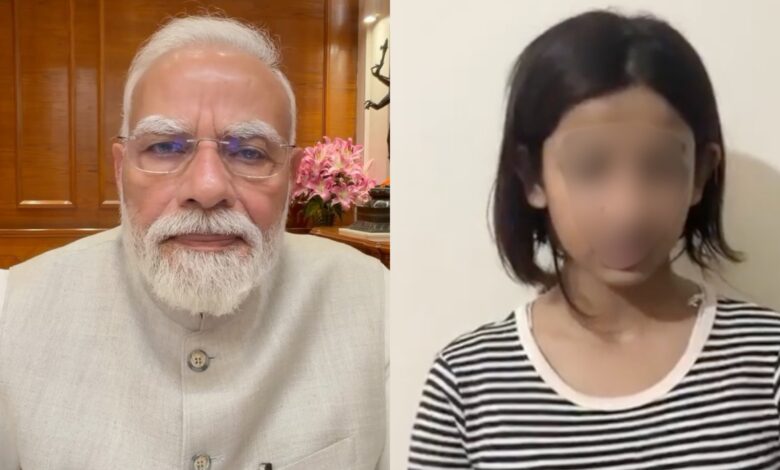
In the roughly three-minute clip, Modi recalled that he — and even his late mother — had been the target of abusive language during protests over NEET exam irregularities at Delhi’s Jantar Mantar. He described those responsible as “mischievous children,” argued that pursuing them through the courts would achieve nothing, and said he wanted to forgive them and move on. He asked the country to do the same.
The video was widely shared and, on its face, read as a conciliatory gesture from the country’s top office.
The case that complicates the message
Within hours, a second video began circulating on social media. It showed a girl — reportedly 15 years old, though her identity and age could not be independently verified — tearfully apologising and asking the country’s forgiveness. She had allegedly raised slogans against Modi during the same round of NEET protests, organised under the banner of the Cockroach Janta Party (CJP), and an FIR was registered against her in Noida as a result. The case has since been transferred to Delhi.
Notably, the complaint didn’t come from Modi himself. It was filed by a Ghaziabad-based advocate, invoking sections of the Bharatiya Nyaya Sanhita covering intentional insult meant to provoke a breach of peace, statements likely to cause public mischief, and defamation. Legal commentators point out that criminal defamation is ordinarily meant to be pursued by the person actually defamed, not a third party acting on their behalf.
The optics of the two videos running side by side — a Prime Minister offering forgiveness, and a minor still facing active prosecution over comments about him — is what has driven much of the criticism directed at the government since Friday night.
What the courts have said about speech-related FIRs
The Noida case isn’t happening in a legal vacuum. In March 2025, the Supreme Court quashed an FIR filed in Gujarat against Rajya Sabha MP Imran Pratapgarhi over a poem, ruling that police must actually examine the content in question before registering a case, and describing the routine filing of speech-related FIRs as an abuse of legal process. The court also underlined that even opinions many people find unpopular are entitled to protection.
Critics, including Siasat Daily’s editorial board, have argued the Noida case sits uneasily against that precedent, and have also drawn a comparison to Parliament itself — pointing to the 2023 Lok Sabha episode in which BJP MP Ramesh Bidhuri directed communal slurs at BSP MP Danish Ali, which resulted in expunged remarks and a warning from the Speaker, but no criminal case.
Where things stand
As of now, Modi’s video has not been followed by any withdrawal of FIRs, dropped charges, or public instruction to police to stand down in cases connected to the NEET protests. Whether that happens — or whether “forgiveness” remains limited to the video itself — is likely to shape how the moment is remembered.
GlintInsight will continue following developments in the Noida case and any government response to the criticism.