


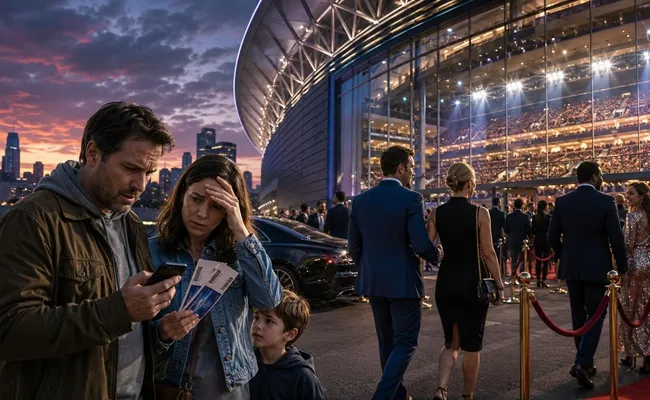
Remember when you could grab a movie ticket for ₹100 and still afford popcorn? Those days are dead. Today, premium theater seats cost ₹800-₹1,200, cricket matches demand ₹5,000-₹25,000, and concert tickets for top international artists have skyrocketed to ₹15,000-₹50,000.
Entertainment, once a universal escape for everyone, has transformed into an exclusive luxury reserved for the wealthy. The question every Indian is asking: Who decided entertainment should be a rich man’s game?
The Numbers That Shock
The cost of entertainment has exploded across every category:
Movie Tickets (Major Cities)
| Seat Type | 2010 Price | 2026 Price | Increase |
|---|---|---|---|
| Standard | ₹80-120 | ₹350-450 | 300% |
| Premium | ₹150-200 | ₹800-1,200 | 500% |
| Gold/Dolby | ₹200-250 | ₹1,000-1,500 | 500-600% |
Cricket Match Tickets (IPL)
| Category | 2010 Price | 2026 Price | Increase |
|---|---|---|---|
| General | ₹500-1,000 | ₹3,000-5,000 | 400-500% |
| VIP | ₹2,000-3,000 | ₹15,000-25,000 | 600-700% |
| Corporate | ₹5,000+ | ₹40,000-60,000 | 700-800% |
Concert Tickets (International Artists)
| Tier | 2015 Price | 2026 Price | Increase |
|---|---|---|---|
| Standard | ₹3,000-5,000 | ₹12,000-18,000 | 300-400% |
| VIP | ₹8,000-12,000 | ₹30,000-45,000 | 300-400% |
| Premium | ₹15,000+ | ₹50,000-80,000 | 300-450% |
In just 15 years, entertainment costs have increased 3-7 times — far outpacing inflation (which averaged 6-7% annually) and wage growth.
The Real Story: Why Prices Skyrocketed
1. Premiumization of Experience
Theater chains and event organizers have shifted from ” affordable entertainment” to “luxury experiences.” They’re selling:
- IMAX screens with Dolby Atmos
- Reclining seats with food service
- VIP lounges with champagne
- Exclusive meet-and-greets
2. Market Segmentation
Companies now target high-income audiences specifically:
- Upper 10% of India’s population (≈14 million people)
- These consumers have disposable income of ₹200,000+ annually
- They’re willing to pay premium prices for exclusivity
3. Corporate Ownership
Major entertainment companies are now publicly traded or backed by venture capital:
- Need to show profit growth
- Pressure to increase margins
- Focus on “high-value customers” over mass appeal
4. Digital Streaming Paradox
While streaming services (Netflix, Amazon Prime) offer cheap alternatives, theaters and live events use premium pricing because:
- They can’t compete on convenience
- They must differentiate on “experience”
- Only luxury justifies the trip
Who’s Actually Getting Left Out?
The Middle Class (70% of India)
| Income Group | Monthly Income | Entertainment Budget | Can Afford |
|---|---|---|---|
| Lower Middle | ₹25,000-40,000 | ₹1,000-2,000 | 1 movie/month |
| Middle | ₹40,000-70,000 | ₹2,000-4,000 | 2-3 movies/month |
| Upper Middle | ₹70,000-150,000 | ₹4,000-8,000 | IPL + concerts |
For a family of four:
- Movie + snacks: ₹1,600-2,400 (4 premium tickets + popcorn)
- IPL match: ₹12,000-20,000 (4 general tickets)
- Concert: ₹48,000-80,000 (4 standard tickets)
That’s ₹60,000-₹100,000 for basic entertainment — more than 15-25% of monthly income for middle-class families.
The Working Class (20% of India)
| Income Group | Monthly Income | Entertainment Budget | Reality |
|---|---|---|---|
| Working Class | ₹15,000-25,000 | ₹500-1,000 | 1 movie/year |
| Low Income | ₹8,000-15,000 | ₹200-500 | Streaming only |
For these families, entertainment is not a priority — it’s food, rent, education first. Streaming services are the only accessible option.
The Social Impact: Entertainment Is No Longer Equal
What This Means for Society
| Issue | Impact |
|---|---|
| Cultural Divide | Only wealthy experience shared cultural moments |
| Social Isolation | Middle/working class can’t attend events with friends |
| Lost Memories | Families miss out on bonding experiences |
| Youth Dreams | Young people can’t afford to see artists they love |
| Class Reinforcement | Entertainment becomes a status symbol |
Dr. Rajesh Kumar, sociology professor at University of Hyderabad, says:
“When entertainment becomes exclusive, it reinforces class divisions. The rich get richer experiences, the poor get left behind. This isn’t just about movies — it’s about who gets to participate in society’s cultural fabric.”
The Industry’s Defense: “We’re Providing Value”
Entertainment companies argue they’re not just selling tickets — they’re selling experiences:
Industry Claims
| Claim | Reality Check |
|---|---|
| “Better screens/sound” | True, but standard seats still cost 3x more |
| “Comfortable seating” | Yes, but premium seats cover only 20% of capacity |
| “Exclusive experiences” | True, but only for top 10% of consumers |
| “Market demand” | Only from wealthy segment, not mass market |
The problem: Most consumers don’t have that demand. They want affordable entertainment, not luxury.
What’s Happening in Other Countries?
Global Comparison (Per Ticket)
| Country | Movie Ticket | Cricket Match | Concert |
|---|---|---|---|
| India | ₹350-1,200 | ₹3,000-25,000 | ₹12,000-50,000 |
| USA | $12-18 (₹1,000-1,500) | $50-150 (₹4,000-12,000) | $80-200 (₹6,500-16,000) |
| UK | £10-15 (₹1,000-1,250) | £30-80 (₹2,500-6,500) | £60-150 (₹5,000-12,500) |
| South Korea | ₩9,000 (₹900) | ₩40,000 (₹4,000) | ₩80,000 (₹8,000) |
India’s prices are 3-5x higher relative to income compared to developed countries.
The Key Difference
In the US, UK, and South Korea:
- Concession prices are high, but tickets are affordable
- Government regulations limit price gouging
- Class-based pricing is more balanced
- Public subsidies exist for cultural events
In India:
- No regulations on ticket pricing
- Class-based pricing favors wealthy
- No subsidies for public entertainment
- Corporate ownership prioritizes profit over access
The Streaming Alternative: Is It Sufficing?
Streaming vs. Live Entertainment
| Factor | Streaming | Live Events |
|---|---|---|
| Cost | ₹499-1,499/month | ₹3,000-50,000/event |
| Convenience | Watch at home | Must travel |
| Quality | Good (4K) | Premium (IMAX, live) |
| Experience | Solo/small group | Shared cultural moment |
| Accessibility | Everyone | Mostly wealthy |
Streaming is the only affordable option for 80% of Indians. But it can’t replace the shared experience of live entertainment.
What Can Change This?
Possible Solutions
| Solution | Feasibility | Impact |
|---|---|---|
| Government price caps | Low (private companies resist) | High |
| Tax subsidies for standard seats | Medium (economically viable) | High |
| Public theaters/museums | Medium (requires funding) | High |
| Community-based events | High (local organizations) | Medium |
| Workplace entertainment programs | High (corporate partnerships) | Medium |
What Consumers Can Do
- Support affordable alternatives (local theaters, community events)
- Demand transparency from entertainment companies
- Choose streaming when live events are too expensive
- Advocate for regulations that protect middle-class access
- Vote for policies that support cultural accessibility
The Bottom Line
Entertainment was once India’s greatest equalizer — a place where rich and poor, educated and uneducated, could bonding over shared experiences. Now, it’s become a luxury reserved for the wealthy.
The transformation isn’t accidental. It’s the result of:
- Corporate profit maximization
- Market segmentation favoring the wealthy
- Lack of government regulation
- Premiumization over accessibility
The question isn’t whether entertainment should be expensive. The question is: Should entertainment be accessible to everyone, or just the rich?
For a country where 80% of citizens earn less than ₹100,000 monthly, entertainment priced at ₹1,000-50,000 per event is not just expensive — it’s exclusionary.
.