


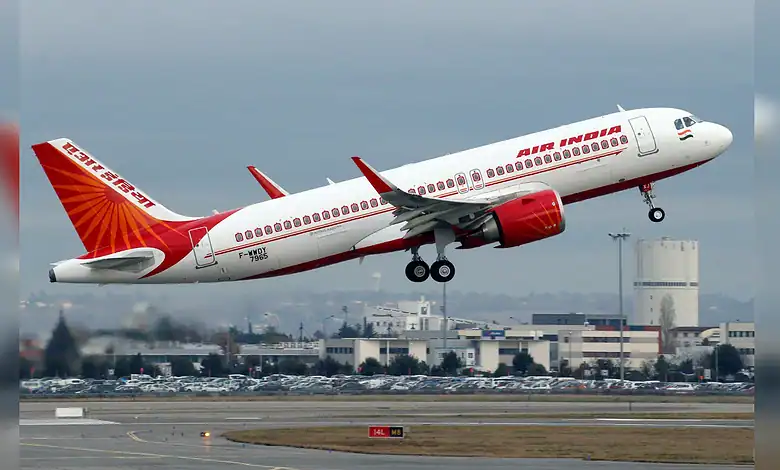
An Air India flight departing from Delhi for Amritsar on the night of June 22 accidentally crossed into Pakistani airspace during its approach to Amritsar airport, prompting India’s civil aviation regulator to launch an urgent investigation and take interim action against the crew and ground controller. The DGCA has placed the concerned air traffic controller at Amritsar and the operating crew under scrutiny for failing to report the incident promptly. Air India has confirmed the “marginal infringement” and initiated an internal probe.
Flight AI479, operated by an Airbus A321 (registration VT-PPV), departed Delhi at approximately 9:18 PM and was approaching Amritsar when air traffic control directed it to hold due to operational constraints. During radar vectoring, the aircraft briefly crossed into Pakistani airspace near Attari. Lahore Air Traffic Control promptly alerted the pilot, and the aircraft executed a U-turn to return safely to Indian airspace. Because Amritsar had heavy air traffic at the time, the flight was diverted back to Delhi, refueled, and later continued to Amritsar. The aircraft remained in Pakistani airspace for less than two minutes.
DGCA officials said the airspace infringement was coordinated with Pakistani air traffic control and did not pose immediate safety risks. Air India described the incident as a “marginally infringed” airspace during a routine go-around manoeuvre at Amritsar airport. An official noted that the flight flew “within a mile or so” of the international border; its exact position remains unconfirmed, but movements were coordinated with Lahore ATC. The airline reported the incident to regulatory authorities and initiated an internal investigation.
The DGCA has taken interim action against the air traffic controller and the operating crew for failing to report the incident. The regulator said it is fully briefed on the matter and is overseeing the investigation. Sources indicate a formal investigation is underway to determine the precise cause of the deviation.
Safety experts say air traffic coordination across borders is critical to prevent even minor airspace violations. They also note that midair deviations can trigger alarm even if an aircraft returns safely. The DGCA’s quick action shows the regulator is prioritizing accountability and transparency. For Air India, the incident could affect confidence in its operational precision during complex approaches.
Air India stated: “The crew operating flight AI479 from Delhi to Amritsar on 22 June had marginally infringed into the Pakistan airspace while manoeuvring a go-around at Amritsar airport.” Another report noted that Pakistan’s ATC contacted its Indian counterpart and informed them of the error with a warning.
The DGCA and Air India will examine flight data, ATC logs, and crew actions to determine the root cause. The interim action may lead to further penalties or training for the crew and controller. Airlines and ATC may revise approach procedures near border zones to reduce the risk of similar incidents.
This was not a dramatic midair crisis; it was a brief, coordinated airspace deviation that ended safely. The fact that it happened at all has shaken confidence and triggered swift regulatory action. The DGCA’s response shows that even minor infractions near sensitive borders are taken seriously, with accountability for both the crew and ATC.