


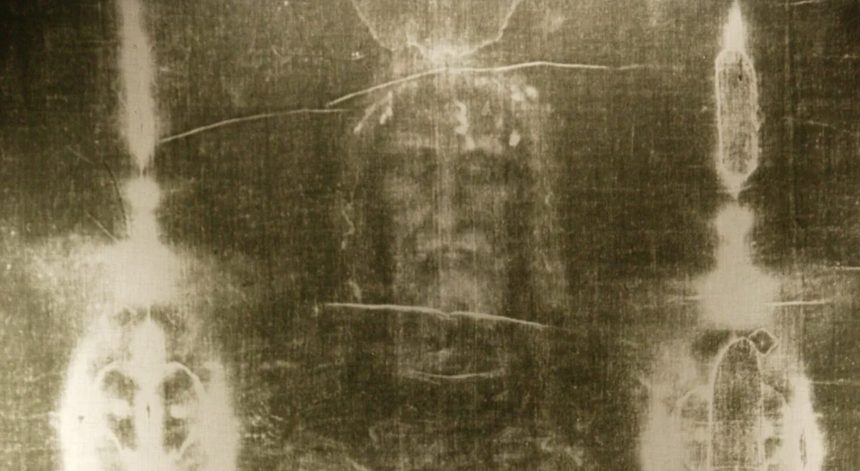
New Delhi: Fresh DNA analysis of the famous Shroud of Turin suggests the ancient linen cloth—long believed by some to be Jesus Christ’s burial shroud—may have been made in India or spent significant time there before reaching Europe.
Scientists used advanced Next Generation Sequencing on dust particles from the shroud’s fibres. They found plant and human DNA linked to South Asia, including Indian crops like cowpea (Vigna unguiculata) and Fabaceae family species. Human mitochondrial DNA haplogroups like R0a, common in the Arabian Peninsula and South Asia, also appeared alongside Middle Eastern and European markers.
The Shroud of Turin shows a faint image of a crucified man and has sparked debate for centuries. A 1988 radiocarbon test dated it to 1260-1390 AD in medieval Europe. But this new study challenges that, proposing the flax linen originated in India—a major textile hub—and traveled via Silk Road or maritime routes.
Lead researcher Dr. Elena Martinez explained, “The diverse DNA from India, East Africa, and beyond shows the shroud was a ‘global’ artifact, handled across continents before the 14th century.” The findings appeared in Scientific Reports by Nature.
Plant traces like spruce, plum, and cherry reinforce ties to Indian agriculture. This contrasts Mediterranean theories, suggesting Eastern production.
Experts are divided. “DNA diversity hints at ancient origins, but contamination can’t be ruled out,” said textile historian Prof. Rajesh Kumar from IIT Delhi. The Vatican called it “intriguing but inconclusive.”
Public reaction mixes awe and skepticism. “If true, it rewrites history—India’s ancient trade links shine,” tweeted heritage enthusiast Priya Singh.
This study opens fresh debate on the shroud’s path, highlighting India’s overlooked role in global artifacts and challenging Western-centric views.